Which Parts of a Job Application Still Need Human Judgment?
Submitting 50 applications isn't necessarily better than submitting 15 well-targeted ones. The difference often comes down to how much time goes into finding suitable roles, preparing application materials, and checking each submission. Automating repetitive steps can make a larger job search manageable, but applying faster is only useful when the applications remain relevant and accurate.
The real question is where automation adds value and where it creates unnecessary risk. Routine tasks can often run with minimal intervention, while decisions about job suitability, qualifications, and personal commitments need closer attention. Knowing where to draw that line helps candidates save time without letting efficiency come at the expense of application quality.
- AI can speed up repetitive application tasks, but candidates should remain responsible for important decisions.
- Job fit, career goals, factual accuracy, and personal motivation require human review.
- AI-generated resumes and cover letters should be checked for unsupported claims, generic wording, and errors.
- Screening questions about qualifications, work authorisation, salary, and availability need accurate answers.
- LoopCV helps automate parts of the job search while giving candidates tools to review resumes, find roles, and manage applications.
Why human judgment still matters in AI-assisted job applications
AI can process information quickly, but speed doesn't automatically produce good decisions. A tool might identify a job with a matching title without understanding whether its responsibilities, salary, location, or working conditions suit the candidate.
Similarly, AI can rewrite a resume to sound more relevant, but it may not know which achievements best represent the candidate's contribution or which claims they can confidently defend in an interview.
The most effective approach is to use AI for repetitive work and retain human oversight wherever accuracy, personal preferences, or meaningful career decisions are involved.
Which parts of a job application still need human judgment?

Some tasks can be automated with relatively little intervention, while others require the candidate to make or verify the final decision.
1. Deciding which jobs are worth applying for
AI job-search tools can identify openings based on job titles, skills, and other filters. However, a matching title doesn't always mean the role is a good career move.
A marketing manager position at one company might focus on strategy and team leadership, while another might involve mostly sales targets and client acquisition. Both may match the same search term but require different interests and strengths.
Before applying, check:
- Whether the responsibilities match the candidate's experience and career goals.
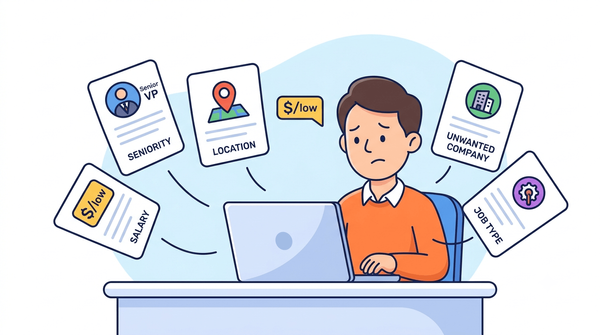
- Whether the seniority and required qualifications are realistic.
- Whether the salary, location, and work arrangement are acceptable.
- Whether the company and role offer the kind of work the candidate wants.
Pro Tip: LoopCV's AI question-answering features can help handle application questions more efficiently. Review answers involving qualifications, work authorisation, salary, and other personal commitments before an application is submitted.
2. Verifying resume claims and achievements
AI can improve wording, make bullet points more concise, and highlight relevant experience. But it can also produce statements that sound convincing without being accurate.
For example, a candidate who supported a project might receive a suggested bullet point saying they led the entire project. That change could misrepresent their responsibilities.
Every resume revision should be checked for:
- Accurate job titles, dates, qualifications, and responsibilities.
- Metrics that can be supported with real evidence.
- Skills the candidate can explain and demonstrate.
- Achievements that reflect their actual contribution.
A resume should present experience in its strongest truthful form, not turn participation into leadership or estimate results that were never measured.
Pro Tip: LoopCV's AI CV Builder can help organise and tailor resume content. Review every suggested change to ensure the final version accurately reflects the candidate's work and achievements.
3. Personalising cover letters and application messages
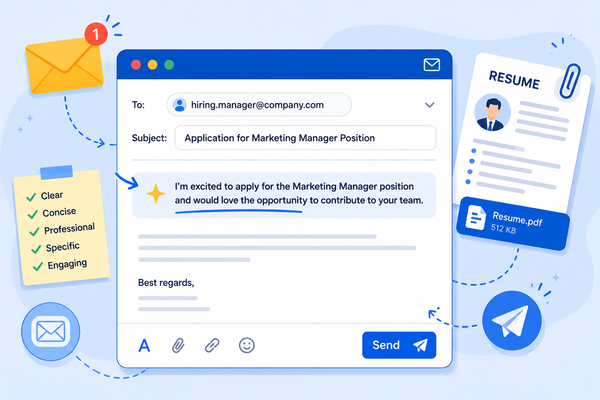
AI can produce a cover letter quickly, but a generic letter may fail to explain why the candidate wants a particular role or how their experience connects to the employer's needs.
A useful cover letter should identify relevant experience and make a credible connection to the responsibilities of the job. That connection needs the candidate's input, especially when explaining motivation or a career change.
Before submitting an AI-assisted letter, check that:
- The company and job title are correct.
- The letter mentions relevant experience rather than repeating the entire resume.
- Any explanation of interest reflects genuine motivation.
- The wording sounds natural and doesn't make unsupported promises.
LoopCV's AI Cover Letter Generator can create a starting draft using details about the role and candidate. The final review should make the letter specific, accurate, and personal rather than leaving it as an unedited template.
4. Answering screening questions accurately
Application forms often include questions about work authorisation, qualifications, years of experience, salary expectations, relocation, and availability. These answers can affect whether an application progresses.
AI can help with routine questions, but it should not guess when an answer depends on the candidate's circumstances. A wrong answer about a required licence or eligibility to work could lead to rejection or create problems later in the hiring process.
Candidates should verify every answer involving eligibility, personal information, compensation, or commitments. If a question is unclear, it is better to check its meaning than let a tool make an assumption.
Pro Tip: LoopCV's AI job search platform helps discover opportunities based on job-search preferences. Set clear job titles, locations, and other criteria, then review the matches to ensure the roles align with actual career goals.
5. Making decisions about career direction
AI can suggest roles based on a resume, identify transferable skills, and recommend possible career paths. But it cannot fully determine what kind of work a person will find meaningful or what trade-offs they are willing to make.
For example, a candidate with experience in customer support might be a potential fit for sales, account management, or customer success roles. The best choice depends on their interests, preferred responsibilities, long-term goals, and willingness to develop new skills.
Use AI recommendations as ideas to evaluate, not instructions to follow. The final decision should reflect the candidate's priorities and realistic understanding of each role.
6. Reviewing the final application before submission
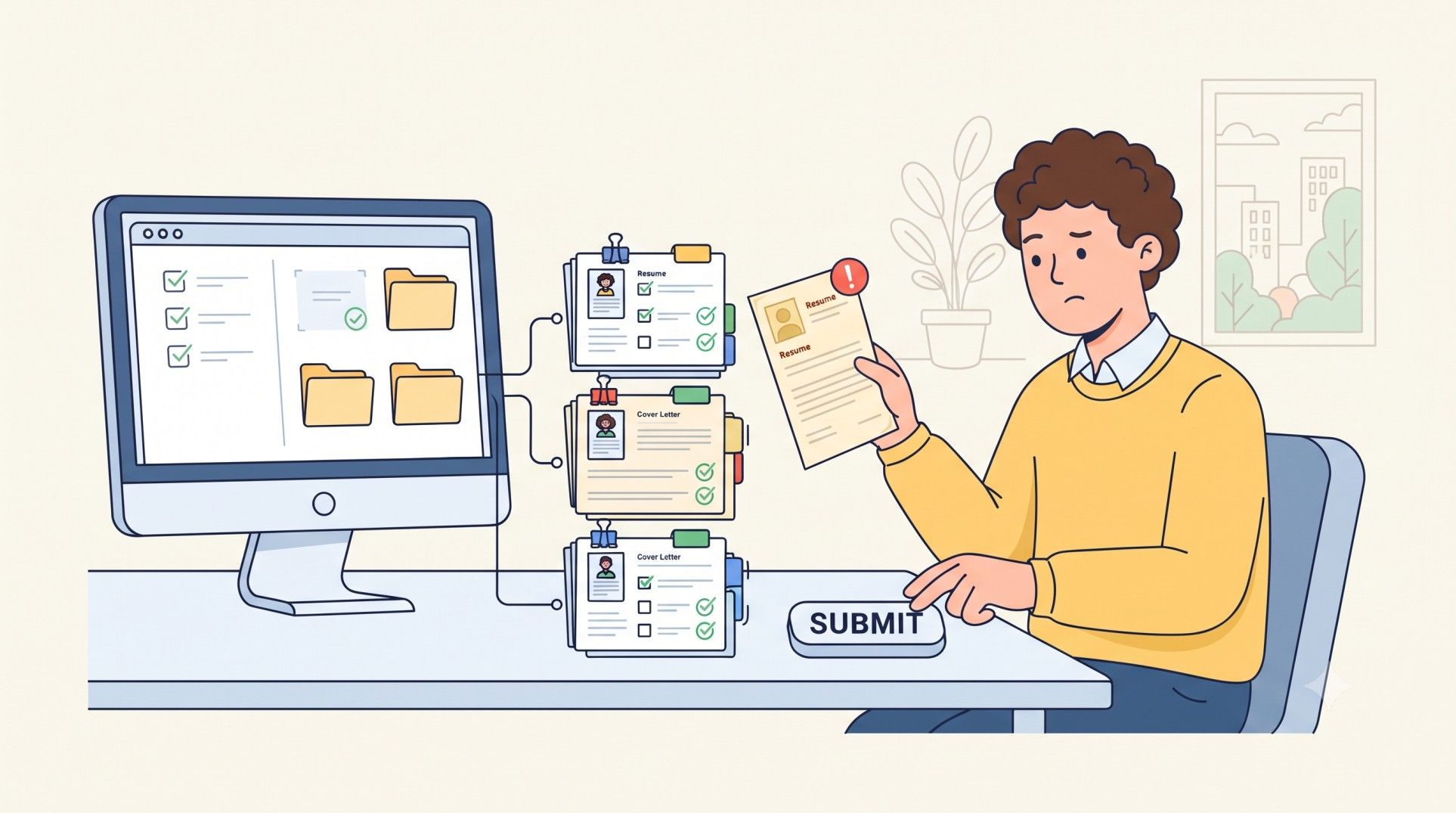
Even when AI handles most of the preparation, the final application deserves a human review. Small errors can affect credibility, and automation may not always interpret a job posting or application form as intended.
Before submitting, confirm that the correct resume version is attached, the employer and role details are accurate, required questions are answered, and the application reflects the candidate's real qualifications.
This is particularly important when applying at scale. A single incorrect setting or outdated resume detail can affect multiple applications if the same information is reused automatically.
Which job application tasks can AI handle more easily?
Not every task needs the same level of involvement. The following distinction helps identify where automation is useful and where review remains important.
The goal isn't to remove AI from the process. It's to decide where automation saves time without taking control away from the person applying.
How LoopCV supports job applications while keeping candidates in control
LoopCV helps manage several stages of the job search, from finding suitable openings to preparing application materials and handling repetitive tasks. Candidates can use the platform to reduce manual effort while keeping important decisions and checks in their own hands.
- Find relevant opportunities: LoopCV's AI job search platform helps discover jobs using the candidate's preferences and search criteria.
- Review resume quality: The AI CV Checker helps identify potential issues with resume structure, content, and ATS compatibility.
- Tailor resume content: The AI CV Builder helps present relevant experience for different roles.
- Prepare cover letters: The AI Cover Letter Generator creates a draft that can be reviewed and personalised.
- Automate applications: LoopCV's automatic application features help reduce repetitive work once the candidate has configured suitable job criteria.
- Apply selectively: One-click application options can provide a more hands-on approach when a candidate wants to review opportunities individually.
- Handle routine questions: AI question-answering features help speed up parts of the application process, while answers that depend on personal circumstances should be verified.
- Track application activity: LoopCV's application management features help candidates keep track of their job-search activity and submitted applications.
- Prepare for interviews: AI interview practice tools can help candidates rehearse answers, identify weak explanations, and prepare for common questions.
These features are most useful when candidates establish clear preferences, provide accurate information, and review the results. Automation can reduce repetitive work, but human judgment remains essential for deciding which jobs to pursue and ensuring that each application represents the candidate honestly.
Conclusion
AI can make job applications faster by helping with job discovery, resume tailoring, cover letters, screening questions, and application management. But it should not replace the candidate's judgment about career goals, job suitability, factual accuracy, or personal commitments.
The best approach combines automation with deliberate review. Let AI handle repetitive tasks where it adds value, then check the decisions and details that could affect the quality of an application or the direction of a career.
FAQs
Can AI apply for jobs without human involvement?
Some tools can automate job discovery and application submission, but candidates should configure their preferences carefully and review important details. Unchecked automation can lead to unsuitable applications or inaccurate answers.
Which parts of a resume should always be checked by a person?
Job titles, employment dates, qualifications, skills, achievements, and measurable results should be checked for accuracy. Any AI-generated statement should reflect the candidate's actual experience.
Should AI write the entire cover letter?
AI can create a useful first draft, but the candidate should personalise it with genuine reasons for applying and relevant experience. An unedited generic letter may not communicate a convincing connection to the role.
Is it safe to automate application screening questions?
Routine questions may be easier to handle with automation, but answers involving work authorisation, qualifications, salary, availability, and other personal commitments should be verified before submission.
How can candidates use AI without losing control of their job search?
Set clear job preferences, review matches, verify application materials, and monitor submitted applications. Use automation to reduce repetitive work while keeping career decisions and factual checks under human control.