5 Problems That Can Happen When You Automate Job Applications
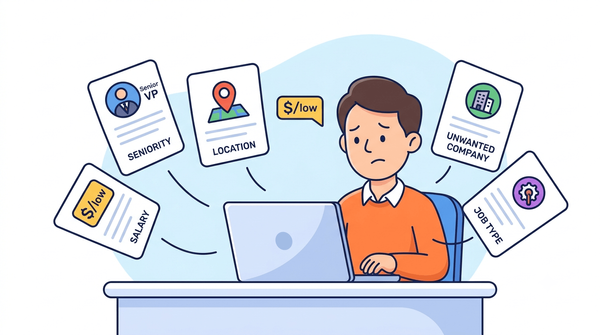
AI auto-apply can save hours of repetitive work by finding jobs and submitting applications at scale. But automation still needs clear rules. Without filters for job titles, salary, location, companies, seniority, and application volume, an automated system can start making decisions that do not match the job seeker's goals.
The result can be duplicate applications, poor-fit roles, unwanted companies, irrelevant listings, or far more applications than intended.
- Automated job application tools follow the rules and filters they are given, so clear settings are important before automation starts.
- Without proper settings, automation can lead to duplicate applications, poor-fit roles, unwanted companies, questionable listings, and excessive application volume.
- Clear job titles, seniority, location, keyword filters, company exclusions, and application limits can help keep automated applications focused.
- Reposted or inactive listings can still enter an automated search, making job freshness and review important before applications are sent.
- LoopCV can help manage job discovery, filtering, company exclusions, CV versions, applications, and tracking while keeping the job seeker in control.
What happens when an automated job search has no rules?
An automated job search needs boundaries. These can include job titles, location, seniority, salary range, required keywords, excluded keywords, companies to avoid, and daily or weekly application limits.
Without those rules, the system has fewer signals for deciding which opportunities actually fit.
Five problems that can happen without application rules
A lack of targeting can create several problems once applications start running automatically.
1. The same job can receive multiple applications
The same vacancy can appear on several job boards or be reposted by the same employer. Without duplicate checks, an automated system may submit more than one application for the same role.
That can create the kind of situation covered by applying to the same job twice, especially when the same listing is available through multiple sources.
Pro tip: Use LoopCV's Job Filtering to narrow the types of jobs entering the application workflow before applications are sent.
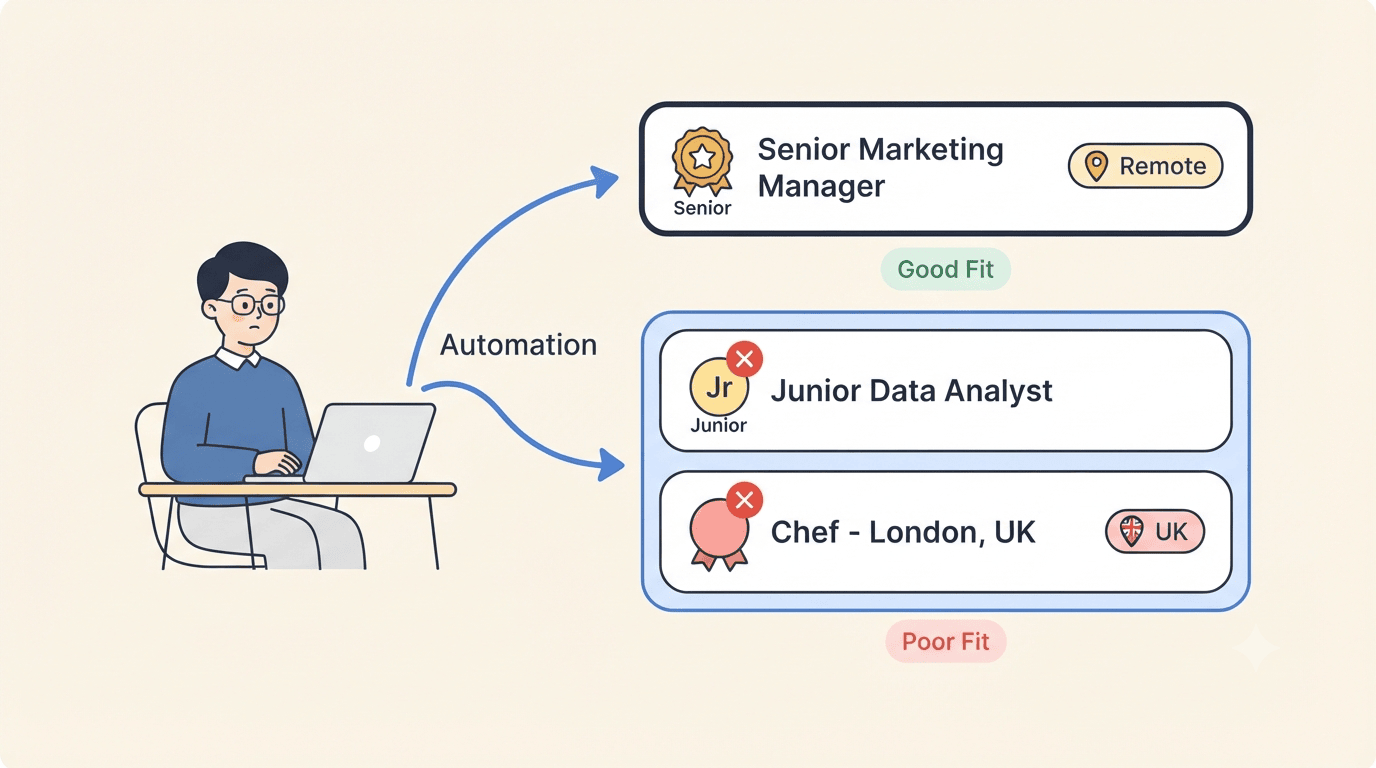
2. Automation can apply to poor-fit roles
Broad job titles can cover very different responsibilities and seniority levels. A search for “marketing manager,” for example, can return roles requiring different experience levels, locations, industries, or technical skills.
Clear title, seniority, location, and keyword rules help prevent automation from treating every remotely relevant listing as a suitable opportunity. This becomes especially important when using AI to apply for jobs automatically, because a broader search can quickly produce a much larger application pool.
3. Applications can go to companies you wanted to avoid
Job seekers may have specific companies they do not want to apply to because of location, previous applications, role type, or personal preferences.
If those exclusions are not added before automation starts, the system may continue applying to them.
Pro tip: Add companies to an exclusion list with LoopCV's Exclude Companies feature so those employers can be removed from the automated search.
4. Reposted or inactive jobs can receive applications
Job boards can contain listings that have been open for a long time, repeatedly reposted, or no longer reflect an active hiring need. Automated applications can continue reaching these listings if the search does not account for job freshness or potential warning signs.
Knowing how to spot a ghost job can help job seekers decide which listings deserve closer attention before automation is allowed to act on them.
A listing can also show patterns associated with a ghost job, such as repeated postings without clear signs of an active hiring process.
Pro tip: Run questionable listings through the LoopCV Job Scam Detector before applying.
5. Application volume can become excessive

Automation makes it possible to send applications much faster than manual job searching. That can become a problem when quantity starts replacing targeting, which is why teams running agents at scale treat preventing agent abuse as a quota design problem, not just a simple rate limit.
Yahoo Finance reported that AI-assisted applications are contributing to a growing volume of applications reaching employers, while WIRED has also reported on how easier automated applications can increase application volume.
A separate analysis from Skillfuel also discusses the additional friction recruiters can face when application volume increases through AI-assisted applications.
The practical issue is simple: sending more applications does not automatically make each application more relevant.
How to put rules in place before automating applications
A few controls can make an automated job search much easier to manage:
- Set a match-quality threshold: Define the experience, skills, titles, and seniority that a job should meet.
- Use keyword filters: Include terms that matter and exclude terms associated with unsuitable roles.
- Create company exclusions: Remove employers that should never receive an application.
- Set an application cap: Decide how many applications can be sent each day or week.
- Track applications centrally: Keep a record of where applications were sent to reduce duplicates and maintain visibility.
A controlled application process is also useful for applying to jobs without spamming, particularly when automation is handling a large number of listings.
Pro tip: Use the LoopCV Job Application Tracker to keep applications organized and reduce the risk of losing track of where an application has already been submitted.
How LoopCV helps keep automated job applications under control
LoopCV is one of the best tools for managing the modern job search when applications need to be organized, targeted, and automated. Instead of relying on a broad search and unlimited applications, job seekers can build rules around the opportunities they actually want.
LoopCV can help with:
- Automated applications: Set up an automated workflow for relevant jobs instead of manually submitting every application.
- Job filtering: Define the job characteristics that matter, including titles, location, keywords, and other criteria.
- Company exclusions: Prevent applications from being sent to specific employers.
- Job matching: Find opportunities based on the criteria and profile being used for the search.
- Multiple CVs: Use different CVs for different types of roles instead of sending one generic version everywhere.
- Application tracking: Keep applications organized and reduce duplicate submissions.
- One-click applications: Handle suitable opportunities manually when full automation is not appropriate.
- AI question answering: Speed up application questions while keeping the application process moving.
- CV statistics and A/B testing: Compare CV performance and identify which versions are generating better results.
The goal is to give automation enough direction to handle repetitive work without removing control from the job seeker.
Conclusion
Automating job applications can save significant time, but the quality of the setup determines how useful that automation becomes. Without rules, an automated system can send duplicate applications, target unsuitable roles, ignore company exclusions, apply to questionable listings, or generate unnecessary application volume.
Clear filters, exclusions, application limits, and tracking provide the boundaries needed to keep the process focused.
FAQs
Can automated job applications lead to duplicate applications?
Yes. The same job can appear on multiple platforms or be reposted, which can result in duplicate applications without appropriate checks.
How can I stop an auto-apply tool from applying to unwanted companies?
Use company exclusion settings to prevent applications from being sent to specific employers.
Should I set a daily limit for automated applications?
A daily or weekly limit can help keep application volume manageable and give job seekers more control over the process.
Are all automatically found jobs worth applying to?
No. Automated job discovery can surface relevant opportunities alongside poor-fit, outdated, or questionable listings. Filters and review rules help narrow the results.