STAR Interview Method: How to Answer Questions With STAR
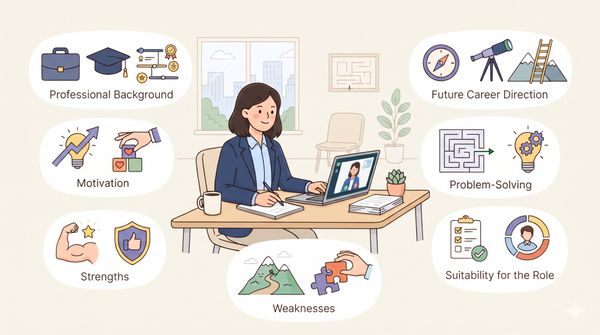
Some interview questions are difficult to answer because there isn't one correct response. Instead of asking what a candidate knows, the interviewer may want to understand how they handled a difficult situation, solved a problem, worked with others, or responded to a setback.
These behavioural questions are where the STAR interview method can be particularly useful. The framework gives candidates a simple way to organise an example without turning the answer into a long explanation. It helps the interviewer understand what happened, what the candidate was responsible for, what they actually did, and what happened as a result.
- STAR stands for Situation, Task, Action, and Result.
- The framework works best for behavioural and competency-based interview questions.
- The Action section should receive the most attention because it shows what the candidate personally did.
- Results are stronger when they include measurable outcomes or specific changes.
- STAR should provide structure without making an answer sound memorised.
- LoopCV’s AI interview tools can help candidates practise STAR responses before an interview.
What is the STAR interview method?
The STAR method is a framework for answering behavioural interview questions by breaking a real experience into four parts:
S = Situation
T = Task
A = Action
R = Result
Instead of describing an entire project from beginning to end, the candidate selects one relevant example and presents it in a logical sequence.
For example, an interviewer might ask:
"Tell me about a time you had to deal with a difficult deadline."
A candidate could explain the situation, describe what needed to be completed, explain the steps they personally took, and finish with the outcome.
The framework is useful because it keeps the answer focused on evidence rather than general claims. Saying "I'm good at handling pressure" tells the interviewer very little. Explaining how a specific deadline was managed gives them something concrete to evaluate.
What does each part of STAR mean?
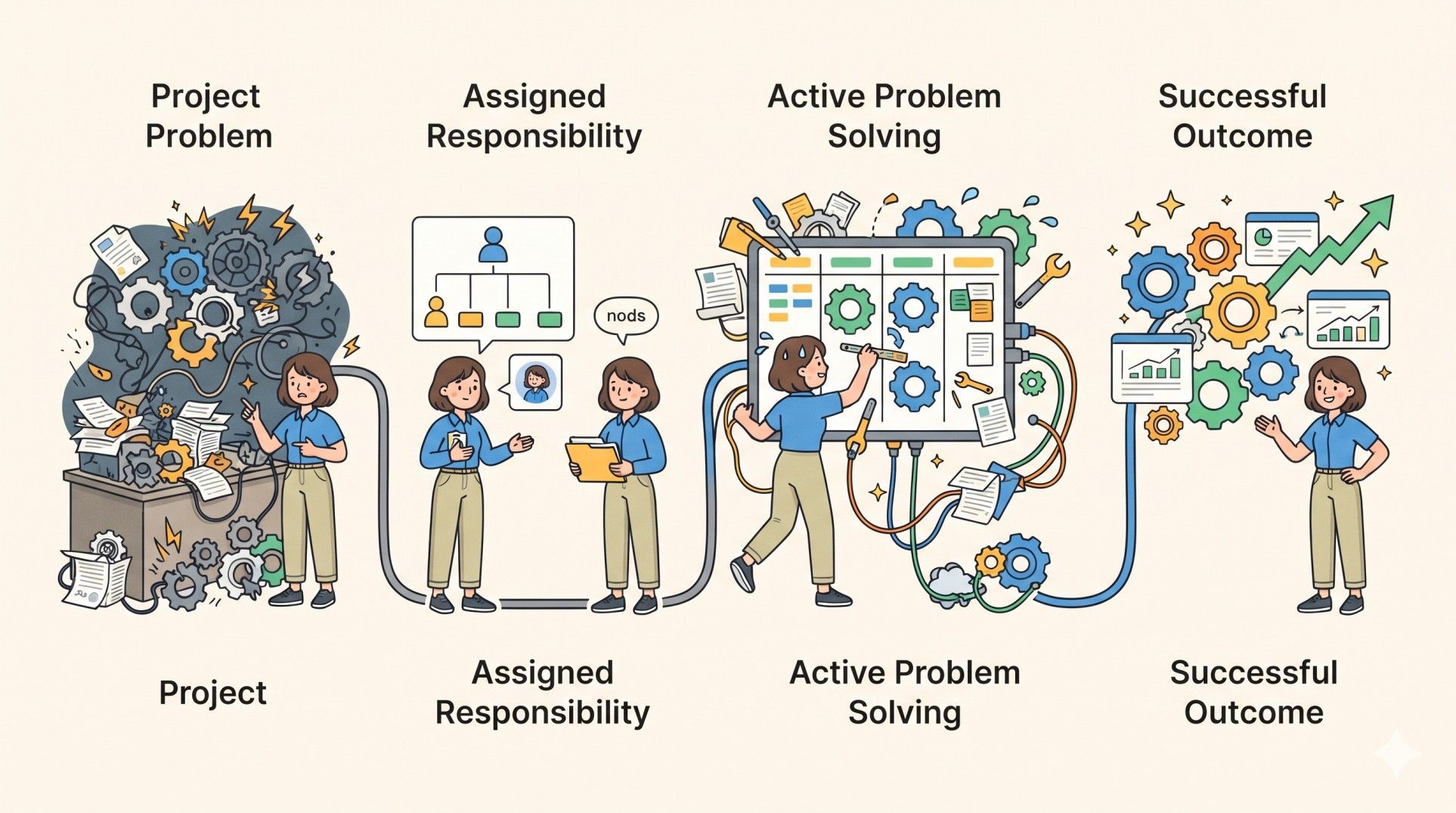
Situation: Set the context
The Situation explains what was happening when the example took place.
It should provide enough context for the interviewer to understand the problem without spending most of the answer describing background information.
Include details such as:
- Where or when the situation occurred.
- What project or responsibility was involved.
- What made the situation challenging.
Example:
"In my previous role, our team had to launch a new website within three weeks after a major change to the original project timeline."
That's enough context to establish the challenge. There is no need to explain every detail about the company or the entire project history.
Task: Explain the responsibility
The Task describes what the candidate needed to accomplish.
This is where the answer moves from the broader situation to the candidate's specific responsibility.
Example:
"I was responsible for coordinating the content migration and making sure the priority pages were ready for launch without delaying the development team."
The Task should make the candidate's role clear. This becomes especially important when the example involves a team because the interviewer needs to understand what the candidate personally owned.
Pro Tip: Before an interview, use LoopCV's AI CV Checker to review the experience and achievements already presented on the resume. These details can help identify real projects and responsibilities that could be developed into STAR examples.
Action: Explain what you did
The Action is usually the most important part of a STAR answer.
Explain the specific steps taken to address the situation. Use "I" rather than relying entirely on "we" so the interviewer can understand the candidate's individual contribution.
For example:
"I created a list of the priority pages, grouped them according to the type of update required, and divided the work into daily targets. I also set up short check-ins with the development team to identify issues early and moved lower-priority pages to a later phase."
This gives the interviewer evidence of planning, prioritisation, communication, and problem-solving.
Avoid simply saying that the candidate "worked hard" or "collaborated with the team." Explain what that actually involved.
Pro Tip: Use LoopCV's Resume Keywords Scanner to compare the resume with the job description before the interview. The comparison can highlight skills and responsibilities that are particularly relevant to the role, which can help candidates choose the most appropriate examples to discuss.
Result: Show what changed
The Result explains what happened because of the actions taken.
Whenever possible, include a measurable outcome:
- Completed the project before the deadline.
- Reduced processing time.
- Increased conversions.
- Improved customer satisfaction.
- Resolved an issue before it affected the launch.
- Reduced errors or rework.
Example:
"The priority pages were ready two days before launch, and the migration went live without any major content-related issues. The process was later reused for another site update."
If an exact number isn't available, describe the outcome clearly. A result doesn't always need to be a percentage or financial figure.
When should the STAR method be used?

STAR is most useful for behavioural questions that ask about something the candidate has actually experienced.
Look for phrases such as:
- "Tell me about a time when..."
- "Describe a situation where..."
- "Give me an example of..."
- "How did you handle..."
- "What did you do when..."
- "Tell me about a situation in which..."
For example:
Question: "Tell me about a time you disagreed with a colleague."
A STAR response could describe the disagreement, explain the candidate's responsibility, outline how the disagreement was handled, and finish with the outcome.
STAR is less necessary for straightforward questions such as "Why do you want this job?" or "What are your salary expectations?" Those questions generally require a different response structure.
Pro Tip: Use LoopCV's AI Mock Interview to practise behavioural questions that can be answered using the STAR framework. Try answering the same experience in response to different question variations so the structure becomes natural rather than memorised.
How to create a STAR answer
The easiest way to prepare is to build a small collection of experiences before the interview.
Start by identifying five or six situations from previous work, education, internships, volunteering, or other relevant experiences.
Look for examples involving:
- A difficult problem.
- A tight deadline.
- A mistake or failure.
- A disagreement.
- A successful project.
- A change in priorities.
- A leadership opportunity.
- A situation where a measurable improvement was achieved.
Then write four short notes for each example:
Situation: What happened?
Task: What was the responsibility?
Action: What did the candidate do?
Result: What changed?
This creates a bank of examples that can be adapted to different questions.
One example can also work for several questions. A project that demonstrates problem-solving could potentially answer questions about leadership, teamwork, handling pressure, or overcoming a challenge, depending on how the story is presented.
Pro Tip: LoopCV's AI CV Builder can help organise and refine the experience presented on a resume. Use the resulting experience statements as prompts for identifying projects, achievements, and responsibilities that can be developed into interview examples.
How long should a STAR answer be?
There is no fixed time limit, but most STAR answers should be detailed enough to demonstrate the candidate's contribution without becoming a long story.
A useful balance is to keep the Situation and Task relatively brief and spend more time on the Action and Result.
For example:
- Situation: 1–2 sentences
- Task: 1–2 sentences
- Action: 3–5 sentences
- Result: 1–2 sentences
The exact length can vary depending on the complexity of the example and the interviewer's follow-up questions.
If the interviewer asks for more detail, expand on the relevant part rather than restarting the entire story.
Common STAR interview mistakes
The framework is simple, but some responses still become difficult to follow.
Spending too much time on the situation
Long background explanations can leave too little time for the part the interviewer actually needs to assess.
Keep the context short and move quickly to the responsibility and action.
Using "we" for everything
Teamwork is valuable, but the interviewer is assessing the candidate's contribution.
Instead of:
"We decided to change the process and worked on the problem."
Explain:
"I reviewed the existing process, identified the main bottleneck, and proposed a new workflow to the team."
Forgetting the result
An answer that ends after describing the action feels incomplete.
Always explain what happened afterward, even if the result wasn't perfect.
Inventing impressive examples
A polished but fictional story can create problems when the interviewer asks follow-up questions.
Use real experiences and focus on explaining them clearly.
Memorising the answer word for word
STAR is a structure, not a script.
Prepare the key points, but allow the wording to change naturally during the interview. This makes the response easier to adapt and reduces the risk of sounding rehearsed.
How LoopCV can help with interview preparation
Preparing STAR answers is easier when the experiences, skills, and achievements from the job application are already organised. LoopCV offers several tools that support different stages of the job search.
- Find relevant jobs: The AI Job Search Tool helps candidates discover opportunities based on their job-search preferences.
- Check resume quality: The AI CV Checker reviews resume content, structure, and potential ATS-related issues.
- Compare resume keywords: The Resume Keywords Scanner checks how closely resume content aligns with a particular job description.
- Build and tailor a resume: The AI CV Builder helps create and adapt resume content for different opportunities.
- Prepare cover letters: The AI Cover Letter Generator helps create starting drafts for applications.
- Practise interviews: LoopCV's AI Mock Interview helps candidates rehearse common and behavioural interview questions.
- Automate applications: LoopCV's job application automation can handle repetitive parts of the application process based on configured search preferences.
- Track applications: Application management features help candidates keep submitted applications and their progress organised.
These tools can reduce the repetitive work around a job search, while interview answers still need to come from the candidate's own experience.
Conclusion
The STAR interview method gives candidates a practical structure for answering behavioural questions without turning every response into a long story. By separating the situation, responsibility, actions, and result, it becomes easier to show what happened and, more importantly, what the candidate contributed.
The strongest STAR answers aren't necessarily the most polished ones. They are the ones that use a relevant real example, explain the candidate's actions clearly, and finish with a meaningful result.
Prepare several examples before the interview, understand the experiences each one demonstrates, and practise adapting them to different questions. The framework should make answers easier to organise, not make them sound scripted.
FAQs
What does STAR stand for in an interview?
STAR stands for Situation, Task, Action, and Result. It is a framework for organising answers to behavioural and competency-based interview questions.
What is the most important part of the STAR method?
The Action section is usually the most important because it shows what the candidate personally did. It should explain the decisions, steps, and skills involved rather than simply describing what the team accomplished.
Can STAR be used for every interview question?
No. STAR works best for behavioural questions that ask candidates to describe previous experiences. Questions about salary expectations, career goals, or why someone wants a particular job generally need a different approach.
How many STAR examples should I prepare?
Preparing around five or six versatile examples can provide a useful starting point. Choose experiences that demonstrate different skills, such as problem-solving, teamwork, leadership, adaptability, and handling pressure.
Should I memorise my STAR answers?
No. Memorise the key points rather than the exact wording. This helps answers sound natural and makes it easier to adapt an example when an interviewer asks a slightly different question.