7 Resume Fixes For Career Changers Applying To Artificial Intelligence Roles
It's difficult enough to change careers without having a resume that subtly works against you. Even if you have years of expertise in marketing, operations, finance, education, or healthcare, a recruiter may not immediately recognize how that experience relates to an artificial intelligence team. Sometimes the problem is how your experience is presented, although certain AI roles also require additional technical training.
Think of your resume as a translation task: turning complex work experience into concise, compelling evidence that an unfamiliar employer can understand. These seven practical fixes draw on hiring research and career guidance to help career changers present their qualifications more clearly. None guarantees an interview, but each can strengthen the way relevant experience is communicated.
- A resume should make the connection between your experience and the target position easy to understand.
- Transferable skills for tech roles become more persuasive when supported by specific responsibilities, projects, and verifiable results.
- Simple formatting and accurate ATS resume keywords can help employers and recruitment systems interpret your qualifications, but they cannot guarantee that an application will advance.
- Relevant projects can demonstrate capabilities that previous job titles may not reveal, although they do not replace mandatory qualifications.
Why career changers are moving into AI roles
Career changes are becoming more common among people switching jobs, according to a June 2026 Revelio Labs analysis of U.S. workforce data. The company found that 38.5% of workers who switched jobs in 2025 also moved between occupational categories, compared with approximately 35% in 2019. These figures describe the share of job transitions involving a change in role category, not the percentage of all workers changing careers.
Among workers moving into AI project coordination and AI engineering, common previous fields included academia, research, data analysis, and manufacturing engineering. The analysis also found that approximately 18% of career changes into these AI roles occurred within the same parent company, rather than the 25% originally reported.
That distinction matters. Many applicants entering AI-related positions are moving between organizations, where recruiters may not know their previous work. A resume helps convey relevant experience, but it is only one part of the recruitment process, alongside interviews, assessments, portfolios, and referrals.
From a labor-market signaling perspective, a resume helps communicate capabilities that an employer cannot immediately observe. This is a useful way to understand the challenge, not a separate finding established by the Revelio Labs analysis.
What is the actual purpose of your resume? It should include results you can discuss in an interview, a clearly defined desired role, and evidence of relevant skills. The rest is supporting context that should reinforce your qualifications rather than distract from them.
Fix 1: Lead with your target role and strongest transferable skill
A disorganized narrative cannot be saved by keywords, so start with positioning.
Put your target role and strongest transferable skill in a brief professional summary.
For example, “Operations analyst transitioning into AI project coordination, with six years of experience in process improvement and stakeholder reporting,” gives recruiters a clear starting point. Use specific years and qualifications only when they accurately reflect your background.
A strong summary should immediately explain where you want to go professionally and how your previous experience supports that direction.
Fix 2: Prioritize relevant experience, projects, and abilities
Prioritize relevant experience, projects, and abilities without hiding your employment history.
A skills-forward or hybrid layout can highlight transferable capabilities while retaining recognizable job titles and dates. Place your strongest evidence where readers can find it quickly, but do not assume every recruiter follows the same scanning pattern.
The objective is to help employers identify your relevant strengths without making them search through unrelated responsibilities.
Fix 3: Shorten irrelevant responsibilities from previous positions
Shorten or remove irrelevant responsibilities from earlier positions.
Keep enough context to explain your career history, but give more space to achievements that connect with the role you want. There is no universal rule requiring every unrelated responsibility to fit on one line.
For additional context, this LoopCV article explores how AI is affecting career development and the evolving importance of AI-related capabilities in different occupations. However, AI proficiency is not a universal requirement for every nontechnical job.
If you already use AI tools responsibly at work, describe specific applications and outcomes. Make clear whether you used a tool, evaluated its output, or developed the underlying system; these represent different levels of technical competence.
Fix 4: Match your language to the job description
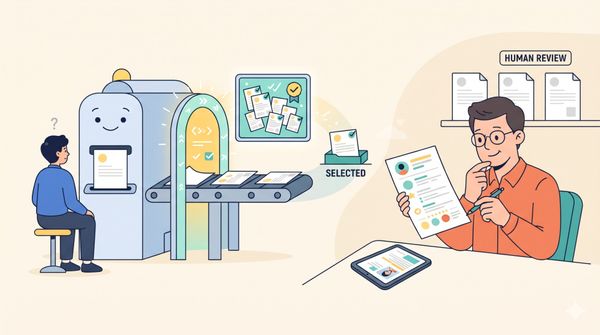
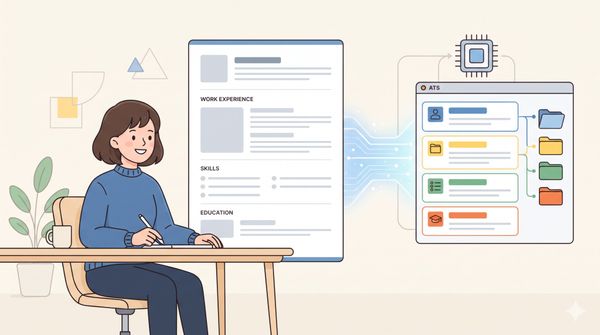
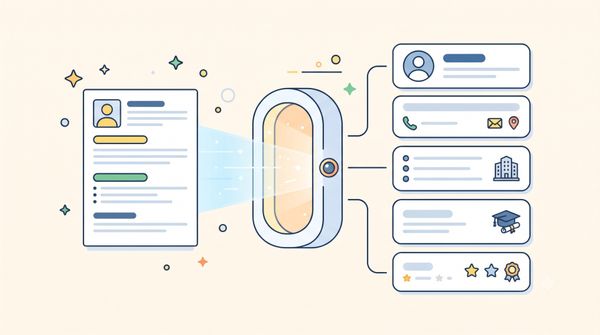
Many employers use applicant tracking systems (ATS) to collect, organize, search, and sometimes screen applications. Their capabilities vary, and using particular keywords does not guarantee automatic approval or rejection.
Still, ATS resume keywords matter when they accurately describe the candidate's qualifications and the employer's requirements.
Match relevant terminology from the job description to skills you actually possess.
If the posting mentions Python, model evaluation, or stakeholder communication, use those terms where they truthfully describe your experience. Exact wording can help establish relevance, but don't replace an accurate description with a misleading keyword merely to imitate the posting.
Fix 5: Translate industry jargon into transferable achievements
Translate industry-specific responsibilities into language that demonstrates transferable skills.
For example, a teacher who actually monitored assessment results and adjusted instruction might write: “Analyzed student performance data for a class of 30 and adapted lesson plans based on assessment results.” This communicates analytical work without inventing a measurable improvement.
Work from the posting itself if you are not sure which terms are important. This guide to finding the appropriate keywords for a job description explains how to identify required qualifications, preferred skills, tools, and responsibilities. Include only terms that genuinely reflect your background.
Fix 6: Demonstrate your abilities through portfolio projects
Polished writing alone does not demonstrate job readiness. Employers also need evidence that your experience and abilities match the role. Research on skills-based hiring emphasizes connecting claimed capabilities to work you have actually performed.
Include two or three relevant portfolio projects when available, each describing the problem, your approach, and the outcome.
A repository or portfolio link may allow reviewers to inspect your work. For example, a customer-churn prediction project using public data could demonstrate data preparation, model evaluation, and documentation. Report appropriate performance metrics, explain how they were calculated, and acknowledge limitations rather than relying on an impressive accuracy number alone.
Fix 7: Use a simple, ATS-friendly resume format
Use a clear, conventional resume layout.
A single-column structure, consistent headings, readable fonts, and straightforward bullet points are practical choices. Avoid unnecessary tables, text boxes, images, and decorative elements that some ATS platforms may parse incorrectly. However, no format is guaranteed to work perfectly with every system. Follow the employer's instructions for file type and submission.
Formatting problems can sometimes interfere with application processing, although there is no reliable evidence that they account for a particular share of rejected candidates. File types, section headings, and potential parsing problems are discussed in this guide on making your resume ATS-friendly.
Although they are not the sole option, credentials can bolster your narrative. The Research.com overview of artificial intelligence master’s programs for non-CS graduates compares educational pathways for applicants without undergraduate degrees in computer science.
The guide discusses prerequisites, bridging courses, technical preparation, and program selection. Some programs welcome applicants from other disciplines but still require foundational knowledge in mathematics, programming, or related areas.
Short courses and portfolio projects may be less expensive than graduate study, but they do not necessarily replace a required qualification. Compare tuition, time, admission requirements, and the skills expected for your intended role before enrolling.
Common mistakes that can weaken career-change applications
These solutions work best when combined, but a few minor mistakes can undermine an otherwise strong resume. Before you hit submit, check your draft against these traps.
- Listing every tool you've encountered or using ATS resume keywords you cannot substantiate. Prioritize genuine proficiency over a long list of unfamiliar technologies. Be prepared to explain how and when you used each relevant tool.
- Using a vague career objective such as “seeking opportunities in the tech industry.” Replace it with a focused summary that connects your existing experience with the specific position.
- Hiding your previous career instead of explaining its relevance. Domain knowledge in healthcare, finance, education, logistics, or law may be valuable to AI teams working on related problems, depending on the employer's needs.
- Sending the same resume to every vacancy. An AI project coordinator, data annotation lead, and prompt engineer may have different responsibilities and qualifications. Tailor your evidence to each role rather than assuming that all AI positions require identical skills.
Expert tips, costs, and data to keep in mind
- Plan for financial uncertainty. A career change may involve a different salary, employment level, benefits package, or period between jobs. Compare total compensation and potential growth with your existing financial obligations. There is no verified universal percentage of AI career changers who accept lower starting salaries.
- Lead with relevant capabilities. Skills such as experimental design, data cleaning, analytical reporting, project coordination, and stakeholder communication may translate well to certain AI-related roles. Match each capability to the duties listed in the vacancy.
- Quantify credible achievements. Percentages, volumes, costs, and time savings can make accomplishments more specific when the numbers are accurate and attributable to your work. Avoid inventing metrics or treating numerical statements as automatically more persuasive.
- Set a realistic job-search schedule. Allow time to develop missing skills, prepare projects, tailor applications, and practice interviews. No reliable universal timeline establishes how many months an AI career transition will take.
- Get feedback from someone familiar with your target field. Ask them which roles your resume appears suited for and whether your strongest qualifications are easy to find. Use their feedback to improve clarity rather than treating one opinion as definitive.
Lastly, maintain a master résumé and a customized one for every application. Keeping accurate descriptions of your experience, achievements, and technical skills in one master document can make tailoring easier. Each final version should use relevant ATS resume keywords naturally while remaining truthful and readable.
FAQs
Can someone without a degree in computer science work in artificial intelligence?
Yes. Some AI-related roles accept professionals from other disciplines, particularly when their experience matches the work involved. Revelio Labs identified transitions from research, academia, data analysis, and manufacturing engineering into AI project coordination and engineering. However, that finding does not mean technical prerequisites can be skipped.
Roles involving machine learning development or advanced software engineering may require substantial programming, mathematics, and model-development skills. Project coordination or domain-focused positions may place more emphasis on communication, operations, and subject expertise. Review the requirements for each vacancy.
How many keywords should I use on my ATS resume?
Prioritize relevance above volume because there is no magic number. Use the tools, methods, qualifications, and responsibilities that accurately match your experience and the position. Avoid keyword stuffing, and give the strongest terms supporting examples elsewhere in your resume.
Which AI positions are practical places for those looking to change careers to start?
The answer depends on your existing qualifications. Revelio Labs identified AI project coordinator as the fastest-growing destination for career switchers in its examined role categories since 2023, with AI engineer and data center technician also among the top five.
Those positions are not equally accessible or interchangeable: AI engineering generally requires deeper technical preparation, while data center work focuses on infrastructure rather than necessarily developing AI models.
Consider roles whose essential requirements you can genuinely meet, and identify any skills you would need to develop before applying. There is no validated rule that meeting half the listed qualifications guarantees a realistic opportunity.
Should my resume be skills-based or chronological?
For those who are changing careers, a hybrid format can be useful. A brief summary and relevant skills section may highlight your fit, while reverse-chronological employment history preserves the context employers need.
Because recruitment systems vary, use clear headings, dates, and job titles. The best structure depends on your experience and the position, not a universal ATS formula.
How long should a career-change resume be?
For most nonacademic U.S. job applications, one concise page may be sufficient when you have limited relevant experience, while two pages can be appropriate for a longer career with substantial relevant achievements.
There is no universal ten-year cutoff or strict two-page maximum. Academic CVs follow different conventions, and employer-specific instructions should take priority. Focus on relevance rather than an arbitrary length.
Can I write my resume using AI tools?
You are in charge of every claim on the page, even if you use AI technologies to write or improve the wording. AI can help organize experience, compare a draft with a job description, and suggest clearer language.
However, verify all generated information, remove invented achievements, and avoid sharing confidential employer or personal information with unapproved services.
The final resume should accurately reflect your voice, qualifications, and accomplishments. Clear, specific evidence matters more than polished language alone.