How to Answer Difficult Interview Questions
A difficult interview question can catch you off guard, even when you have prepared thoroughly.
You might struggle to recall an example, misunderstand the question or simply not know the answer. Take a breath, ask for clarification if needed and give yourself a moment to think. Here’s how to respond.
What should you do if an interview question catches you off guard?
If you are in an interview and are asked a question that you are having difficulty answering, do not panic.
Remember, the interviewer isn’t trying to trip you up.
If you find yourself in this situation, don’t be afraid to ask the interviewer for some time to think about your response.
Here’s what this might look like in an interview setting:
When you need a moment: “Let me take a moment to think of the most relevant example.”
When the question is unclear: “When you say leadership, do you mean managing others or taking the initiative?”
When you lack direct experience: “I haven’t encountered that exact situation, but a similar example from my university project is…”
When you don’t know a technical answer: “I haven’t worked with that before. My initial approach would be…”
Doing this demonstrates your ability to communicate and quickly initiate a plan for handling unexpected situations.
This is also great practice for team meetings once you land your graduate job. Taking time to think and organise your answer clearly will make you come across as confident and in control.
Clearly articulating when you need clarification or are genuinely unsure of a question helps you to build trust.
By explaining that you need a few moments to think, you show that you want to give a considered response.
This is a much better response than telling the interviewer that you can’t answer the question.
Also, don’t hesitate to ask the interviewer questions to clarify what they are asking you. Doing this will help you to answer the interviewer’s question accurately without going off-topic.
Three difficult interview questions and how to answer them
Seeing an example can make it easier to put interview advice into practice. The responses below illustrate how to approach three challenging questions. Use them as a guide, adapting your answer to your own experience:
1. “Tell me about a time you failed.”
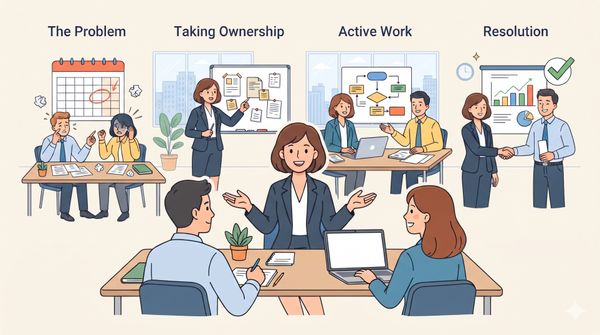
Talking about failure can feel uncomfortable when you are trying to impress an employer. Choose a genuine example, take responsibility and explain what you learnt.
Example response:
“In my second year at university, I underestimated how long a research assignment would take. I left too much of the writing until the final week and received a lower mark than I had hoped for.
“Looking back, I had focused on the final deadline without setting milestones along the way. For my next assignment, I broke the work into smaller tasks and set deadlines for the research, first draft and editing. I finished with time to review my work and achieved a better mark. Since then, I’ve used the same approach to plan larger projects.”
Why this works: The candidate acknowledges their mistake without making excuses. They explain what they changed and provide evidence that they applied the lesson.
2. Why should we hire you when you have limited experience?
You may not have worked in a graduate role before, but you can still demonstrate relevant skills. Draw on examples from university, part-time work, volunteering or extracurricular activities.
Example response:
“I’m at the beginning of my career, but I can offer the organisation and communication skills you’ve highlighted in the job description. During my degree, I balanced coursework with a part-time retail job, where I regularly helped customers resolve problems during busy shifts.
“For a university group project, I also coordinated deadlines and checked that everyone understood their responsibilities. We submitted the project on time and received positive feedback on how clearly we presented our findings. I’d bring that same reliability and willingness to learn to this role.”
Why this works: The candidate supports their strengths with specific examples and connects them to the employer’s requirements. They show how experience outside a graduate job can still be relevant.
3. How would you complete a task using software you have never used?
A question like this can feel difficult because you cannot draw on direct experience. Be honest about the gap, then explain how you would approach the task.
Example response:
“I haven’t used that software before, so I would need to learn the relevant features. First, I’d clarify the required outcome and deadline. I’d then work through the official guidance and try a small practice task before completing the full piece of work.
“If I became stuck, I’d ask a colleague a specific question and explain what I had already tried. I’d also check my first piece of work with someone experienced in the software, so I could identify any mistakes early.”
Why this works: The candidate is honest about what they do not know and offers a clear plan for learning. Their answer shows initiative, judgement about when to ask for help and attention to the quality of their work.
You do not need to memorise these responses. Practise explaining your own examples aloud so that you can give a clear, relevant answer while adapting to the question you are actually asked.
How to prepare for difficult interview questions
The more prepared you are for your interviews, the less difficult the questions will seem.
Interview questions are not designed to trip you up.
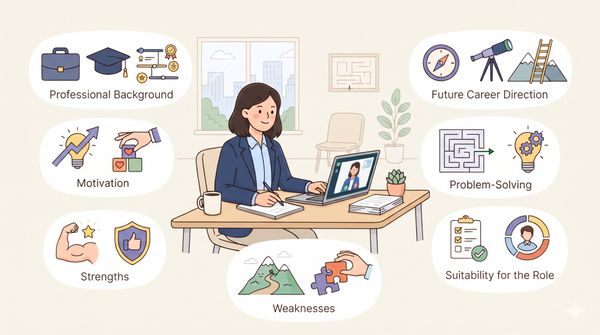
Graduate recruiters ultimately want to determine which candidates closely align with the company’s culture and have the competencies required for the role.
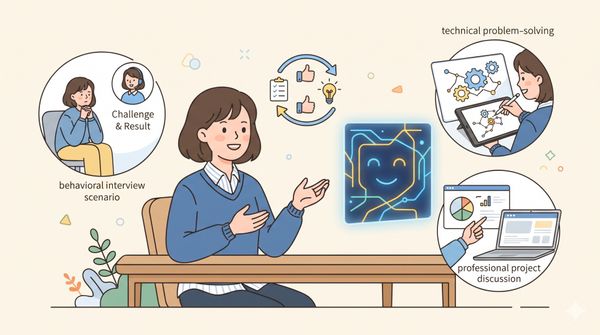
In order to do this, they will ask different types of interview questions. Here are some types of interview questions you may encounter:
- Case questions - Ask you to analyse a problem and explain your reasoning.
- Behavioural questions - Ask for evidence from past experience, such as “Tell me about a time you resolved a disagreement.”
- Situational questions - Ask how you would handle a hypothetical scenario.
- Technical questions - Assess knowledge or skills relevant to the role.
Your perception of how difficult interview questions are will depend on how prepared you are for the interview.
If you are fully prepared for all of the different types of questions you may be asked, you won’t perceive them as being difficult.
Tip: Before your next interview, ensure that you know everything that is humanly possible about the role, company and industry.
Action point 1: Familiarise yourself with the different types of interview questions.
Action point 2: Research common interview questions and practise answering them.
If you would like to learn how to get really good at performing highly in interviews, check out our online interview course.
Summary:
Difficult interview questions can catch anyone off guard, even after thorough preparation. To handle them confidently:
- Prepare relevant examples - Research the role and employer, then draw on your studies, part-time work, volunteering or extracurricular activities to demonstrate the skills they need.
- Give yourself time to think - Pause before answering and ask for clarification if you are unsure what the interviewer means.
- Be honest about gaps in your experience - Explain what you do know, offer a relevant example or describe how you would approach an unfamiliar task.
- Practise without memorising scripts - Aim for clear, specific answers that you can adapt to the question.