7 Most Common Interview Questions and How to Answer Them
An interview can move in many directions, but certain questions appear again and again because they help interviewers understand a candidate beyond the resume. The questions may sound simple, yet a strong answer requires more than repeating experience already listed on the application.
The best responses are specific, relevant to the role, and easy to follow. Preparing a few core answers in advance can make it easier to respond naturally when similar questions come up in different forms.
- Common interview questions are often designed to assess experience, motivation, strengths, self-awareness, and problem-solving ability.
- A good answer should connect the candidate's experience to what the role requires.
- Examples make answers more credible than broad claims about skills or personality.
- Memorizing complete answers can make responses sound rehearsed, so it is better to prepare key points and examples.
- AI interview tools can help with practice, but candidates still need to develop answers that reflect their own experience.
1. Tell me about yourself.
This is often one of the first questions in an interview, and it gives the candidate an opportunity to establish the context for everything that follows.
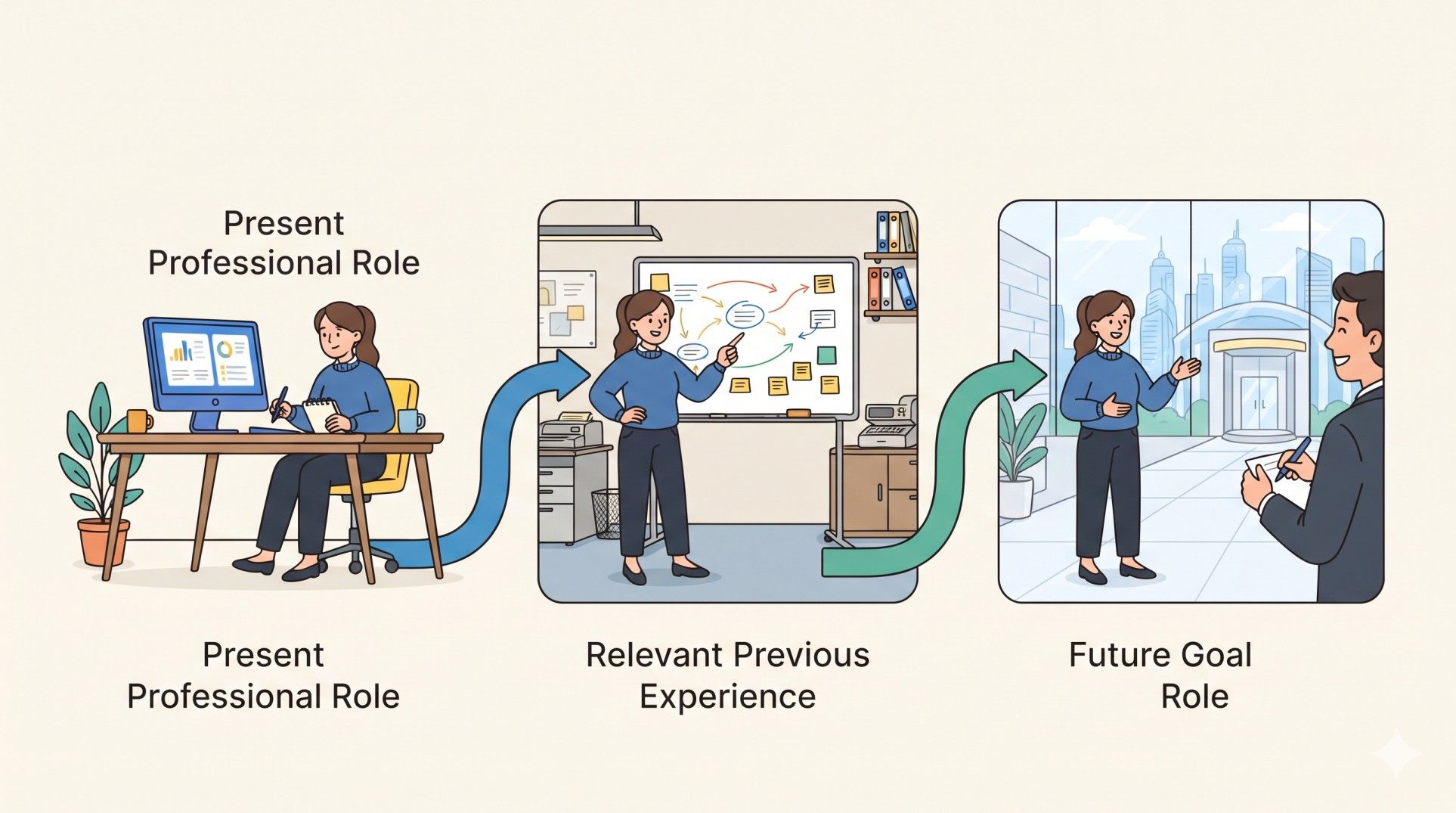
A strong answer should focus on professional experience rather than providing a detailed personal history. A simple structure is:
Present → Past → Future
Start with the candidate's current role or area of expertise, briefly mention relevant experience, and finish by connecting that background to the opportunity.
Example:
"I'm currently working as a content strategist, where I focus on SEO, content planning, and performance analysis. Over the past few years, I've worked across different content projects and developed a strong understanding of how content supports organic growth. I'm now looking for a role where I can take on more responsibility for content strategy and work more closely with broader marketing goals."
The answer should be concise enough to leave room for the interviewer to explore specific parts of the candidate's background.
2. Why do you want this job?
Interviewers generally want to understand whether the candidate has a genuine reason for applying and whether the role fits their professional direction.
Avoid answers based entirely on what the job offers the candidate, such as wanting a higher salary or needing a change. Those may be valid considerations, but they don't explain why the candidate is interested in the particular role.
A better answer connects three things:
- What the company or role does.
- What interests the candidate about that work.
- How the candidate's existing experience relates to it.
Example:
"I'm interested in this role because it combines content strategy with SEO, which are the areas I've been focusing on in my recent work. I also like that the position involves working with content performance rather than treating content creation as a standalone activity. My experience with SEO-led content planning would allow me to contribute from the beginning while continuing to develop my strategic skills."
Specific details about the company or position can make the answer more convincing.
Pro Tip: Before practicing this answer, use the AI Job Search Tool to review the roles being targeted. Understanding the responsibilities and requirements of the actual positions makes it easier to explain why a particular opportunity is relevant.
3. What are your greatest strengths?
This question is more useful when the answer demonstrates a strength rather than simply naming one.
Instead of saying, "I'm a hard worker and a good communicator," choose one or two strengths that matter for the position and support them with evidence.
For example, a candidate applying for a project management role could talk about organization and communication, then briefly explain how those strengths have helped coordinate deadlines, stakeholders, or multiple projects.
A useful structure is:
Strength → Example → Result
This keeps the answer grounded and prevents it from sounding like a list of positive adjectives.
Example:
"One of my strongest skills is organizing complex projects. In my previous role, I regularly managed multiple content projects with different deadlines and contributors. I created a structured workflow for tracking progress and priorities, which helped the team keep projects moving without missing key deadlines."
Pro Tip: Review the AI CV Checker before the interview to identify the strengths already supported by the resume. This can help keep interview answers consistent with the experience presented during the application.
4. What is your biggest weakness?
The purpose of this question isn't to find a candidate who has no weaknesses. Interviewers may be looking for self-awareness and evidence that the candidate can recognize areas for improvement.
Avoid presenting a strength as a weakness, such as "I'm a perfectionist." It often sounds rehearsed.
Instead, choose a genuine but manageable area for improvement and explain what is being done about it.
Example:
"Earlier in my career, I sometimes spent too much time refining work that was already meeting the required standard. I've become more deliberate about setting review limits and prioritizing changes based on their actual impact. That has helped me balance quality with deadlines more effectively."
The weakness should not undermine a fundamental requirement of the role. A candidate applying for a role that depends heavily on public speaking, for example, should be careful about presenting severe difficulty with public speaking as their main weakness.
5. Why should we hire you?
This question gives candidates a chance to bring their strongest evidence together rather than repeating their entire resume.
The answer should focus on the value the candidate can bring to the specific role. Look at the main requirements in the job description and identify the experience that provides the strongest match.
A useful response can combine:
- Relevant experience.
- One or two strengths that matter for the role.
- A specific contribution the candidate could make.
Example:
"My background combines SEO, content strategy, and performance analysis, which aligns closely with the responsibilities of this position. I've already worked on planning and improving content based on search and performance data, so I understand both the creative and analytical sides of the work. I can bring that experience to the role while taking on broader responsibility for content growth."
Avoid claiming to be the "perfect candidate." Specific evidence is more persuasive than exaggerated confidence.
Pro Tip: Use LoopCV's Resume Keywords Scanner to compare the resume with the job description before preparing this answer. The results can help identify the skills and requirements that deserve stronger evidence during the interview.
6. Tell me about a challenge you faced and how you handled it.
Behavioral questions like this are designed to understand how a candidate responds when something doesn't go according to plan.
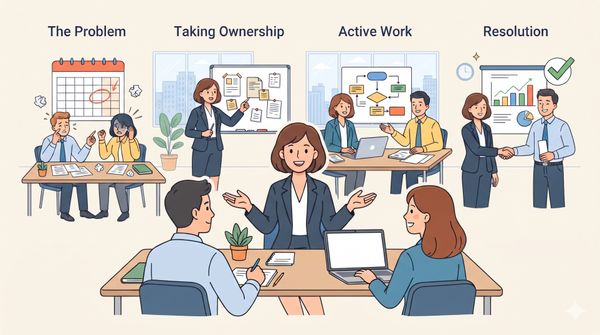
The STAR method can help organize the answer:
- Situation: What was happening?
- Task: What needed to be achieved?
- Action: What did the candidate personally do?
- Result: What happened as a result?
The action section deserves the most attention. Instead of spending most of the answer describing the problem, explain the decisions and steps taken to resolve it.
Example:
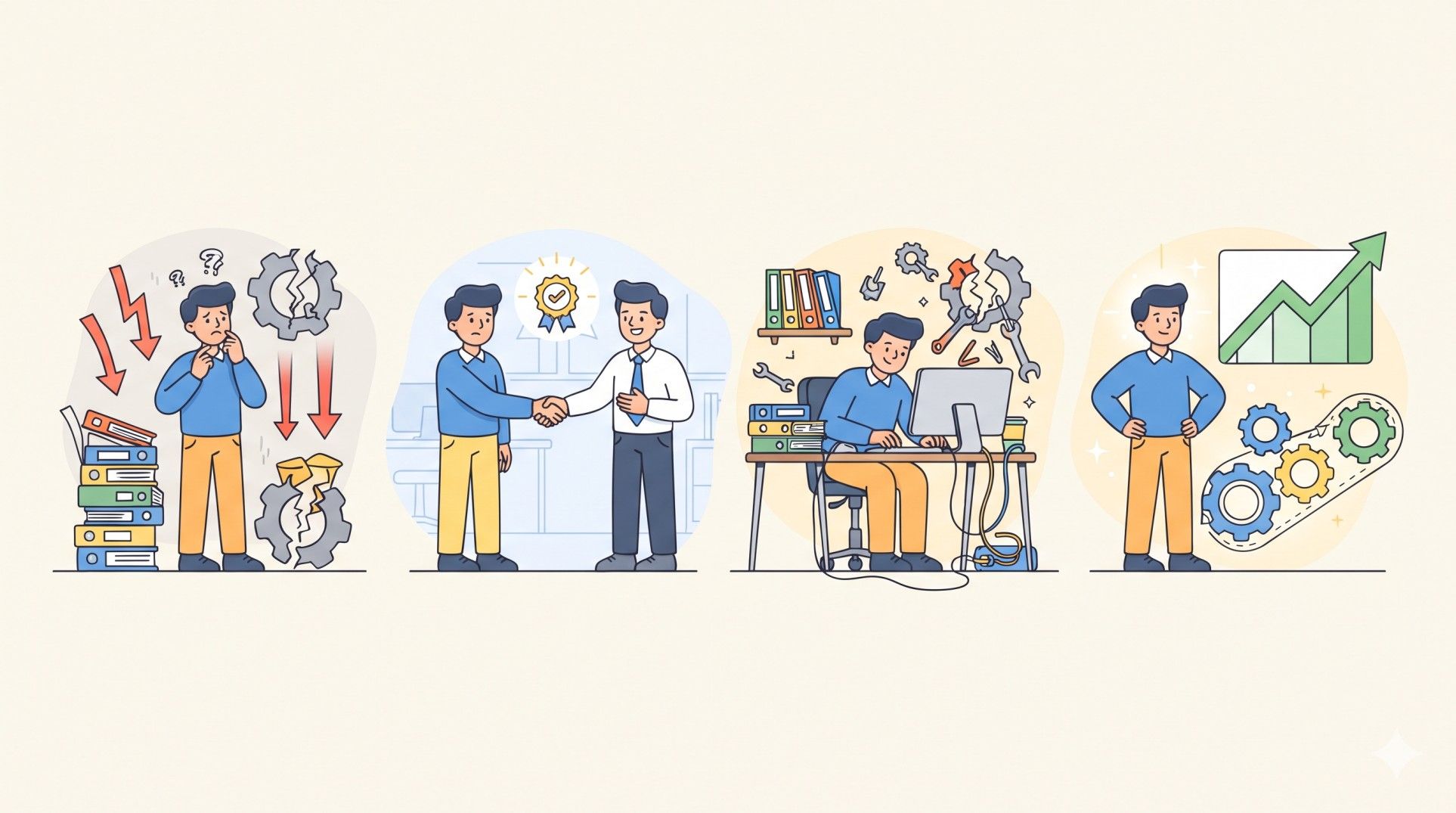
"A content project I was working on began losing organic traffic after a period of growth. My responsibility was to identify what had changed and recommend improvements. I reviewed Search Console and analytics data, compared the affected pages with their previous performance, and prioritized updates based on traffic and search intent. After the changes were implemented, the strongest-performing pages began recovering, and the process also gave the team a clearer framework for identifying pages that needed future updates."
The example should be genuine and detailed enough for the interviewer to ask useful follow-up questions.
7. Where do you see yourself in five years?
This question doesn't require a precise prediction of a candidate's career five years into the future. A useful answer demonstrates direction and shows that the candidate has thought about how the role fits into their development.
Focus on skills, responsibilities, and the type of contribution the candidate hopes to make rather than naming an exact future job title.
Example:
"Over the next few years, I want to deepen my expertise in SEO and content strategy while taking on larger projects and more strategic responsibility. I'd like to become someone who can use performance data to shape content direction and contribute to broader growth decisions. This role would give me an opportunity to build those skills while contributing to the team's current goals."
The answer should remain realistic for the role. Saying that the goal is to become the company's CEO in five years may create the wrong impression unless that progression is genuinely plausible.
How to make interview answers stronger
Knowing common questions is useful, but preparing the right material behind those answers matters more than memorizing scripts.
Before an interview, prepare:
- Three to five career examples that demonstrate different skills or achievements.
- A short professional introduction that can be adapted to the role.
- Specific examples of strengths rather than lists of personal qualities.
- A genuine weakness and improvement strategy.
- Reasons for wanting the specific role and company.
- Questions to ask the interviewer about the role, team, expectations, and next steps.
The same example can sometimes answer different behavioral questions. A project that demonstrates problem-solving may also show communication, ownership, or adaptability. Preparing several strong examples gives candidates flexibility without requiring dozens of memorized answers.
Pro Tip: Use LoopCV's AI Mock Interview to practice different question types before the interview. Pay attention to whether answers are specific, concise, and supported by real examples, then adjust the responses based on the practice sessions.
How LoopCV can help with interview and job-search preparation
Interview preparation is only one part of getting ready for a job. Candidates also need a strong resume, relevant opportunities, tailored application materials, and a way to manage the applications they send.
LoopCV offers tools that support different stages of that process:
- Prepare for interviews: The AI Mock Interview helps candidates practice common questions and improve their responses.
- Check the resume: The AI CV Checker reviews resume content, structure, and potential ATS-related issues.
- Find relevant jobs: The AI Job Search Tool helps candidates find opportunities based on their job-search preferences.
- Compare resume keywords: The Resume Keywords Scanner checks how closely resume content aligns with a particular job description.
- Build and tailor a resume: The AI CV Builder helps create and adapt resume content for different opportunities.
- Create cover letters: The AI Cover Letter Generator helps prepare role-specific cover letter drafts.
- Automate applications: LoopCV's job application automation can handle repetitive application tasks based on configured search preferences.
- Track applications: Application management features help candidates keep their job-search activity organized.
Using these tools together can reduce repetitive work while leaving the important parts of the process, such as choosing suitable roles and giving authentic interview answers, in the candidate's hands.
Conclusion
The seven questions above cover several areas interviewers commonly want to understand: a candidate's background, motivation, strengths, self-awareness, suitability, problem-solving approach, and career direction.
Preparation shouldn't mean memorizing seven perfect responses. A better approach is to understand what each question is assessing, prepare relevant examples, and practice explaining those experiences naturally. That makes it easier to adapt when an interviewer asks the same question in a different way.
FAQs
What are the seven most common interview questions?
Common questions include "Tell me about yourself," "Why do you want this job?" "What are your strengths?" "What is your biggest weakness?" "Why should we hire you?", Tell me about a challenge you faced", and "Where do you see yourself in five years?"
Should interview answers be memorized?
It's better to prepare key points and examples than memorize complete answers. Memorized responses can sound rehearsed and may be difficult to adapt when the interviewer asks a follow-up question.
How long should an interview answer be?
There is no fixed length for every question. Most answers should be concise enough to maintain the interviewer's attention while providing enough context and evidence. Behavioral questions may require more detail than straightforward questions.
What is the STAR method in interviews?
STAR stands for Situation, Task, Action, and Result. It provides a structure for answering behavioral questions by explaining the context, responsibility, steps taken, and outcome.
Can AI help with interview preparation?
Yes. AI can generate practice questions, simulate interview conversations, and provide feedback on responses. Candidates should use it for practice while keeping their answers grounded in genuine experience.