How to Decide Which Parts of a Job Application Are Worth Automating
Applying for jobs involves several repetitive tasks, from finding vacancies and tailoring resumes to filling out application forms and tracking responses. AI job application tools can reduce this workload, but automating every step isn't always the best approach.
The right level of job automation depends on how repetitive a task is, how much judgment it requires, and what could happen if something goes wrong. Identifying these differences helps job seekers save time without losing control over the quality of their applications.
- Automate repetitive tasks such as job discovery, routine form filling, and application tracking when the process is predictable and reliable.
- Use AI to draft and tailor resumes and cover letters, but verify that every skill, qualification, and achievement accurately reflects real experience.
- Keep important decisions, including job suitability, career direction, salary expectations, eligibility, and personal commitments, under human control.
- Automate applications selectively. Routine submissions to relevant roles may benefit from automation, while high-priority opportunities deserve closer review.
- Choose job application software based on the specific task it solves, rather than the number of features it offers.
- LoopCV supports different stages of the job search through job discovery, automated applications, resume tools, recruiter outreach, and application tracking, while candidates retain control over important decisions.
Which parts of a job application are worth automating?
The easiest way to decide is to evaluate each task based on repetition, risk, and the amount of personal judgment it requires.
1. Automate repetitive tasks that follow clear rules
Some job-search activities involve repeating the same process across multiple websites. These are usually good candidates for automation because the steps are predictable and don't require a fresh decision every time.
Examples include:
- Finding vacancies that match predefined job titles and locations.
- Collecting job listings from multiple job boards.
- Filling in recurring application details.
- Tracking application dates and status updates.
- Organising recruiter contacts and follow-up reminders.
For example, entering the same contact details into dozens of application forms can consume time without adding much value. Automating that step lets candidates focus on reviewing opportunities and preparing for interviews.
However, automation still needs accurate information and clear rules. Incorrect profile details or overly broad search criteria can create problems across multiple applications.
2. Use AI for drafting, but review the final content
Resume tailoring and cover letter writing can be time-consuming, particularly when a job description uses different terminology from the candidate's existing resume.
AI can compare the two documents, suggest relevant keywords, improve bullet points, and create a first draft of a cover letter. These tasks benefit from automation because AI can quickly process information and suggest alternative wording.
However, the candidate must verify that the final content reflects genuine experience.
Pro tip: Use LoopCV's AI CV Checker to identify potential issues with resume structure, content, and ATS compatibility. Review the suggestions and ensure every qualification, skill, and achievement is accurate before submitting an application.
A similar approach works for cover letters. AI can prepare a draft, but the candidate should add genuine reasons for applying and remove generic statements before sending it.
3. Keep important career decisions under human control

Automation is less suitable for decisions that depend on personal priorities, professional judgment, or commitments.
For example, an AI job application tool might find a role that matches a candidate's job title and skills but offers an unsuitable salary or requires relocation. The match may look relevant on paper while being a poor choice for the candidate.
Before applying, review:
- Job suitability: Do the responsibilities and seniority match the candidate's experience?
- Career direction: Does the role support their professional goals?
- Working conditions: Are the salary, location, schedule, and work arrangement acceptable?
- Eligibility: Does the candidate meet essential qualifications and work authorisation requirements?
- Personal commitments: Can the candidate honestly agree to the conditions stated in the application?
These decisions should remain with the candidate, even when job discovery and submission are automated.
4. Automate applications selectively
Once the job criteria and application materials are ready, automation can handle repetitive submissions to matching roles. This is particularly useful for candidates applying across several job boards or searching for multiple relevant positions.
However, not every opportunity needs the same application process. A routine application for a well-matched role may be suitable for automation, while a high-priority position may deserve additional company research and a more personalised application.
Pro tip: Use LoopCV's AI job application tool to find matching opportunities, tailor CVs, and automate submissions across supported job boards. Set specific job preferences first, and review high-priority roles manually before applying.
The aim is to automate the repetitive submission process while reserving extra effort for opportunities where personalisation could make a meaningful difference.
How to decide whether a task should be automated
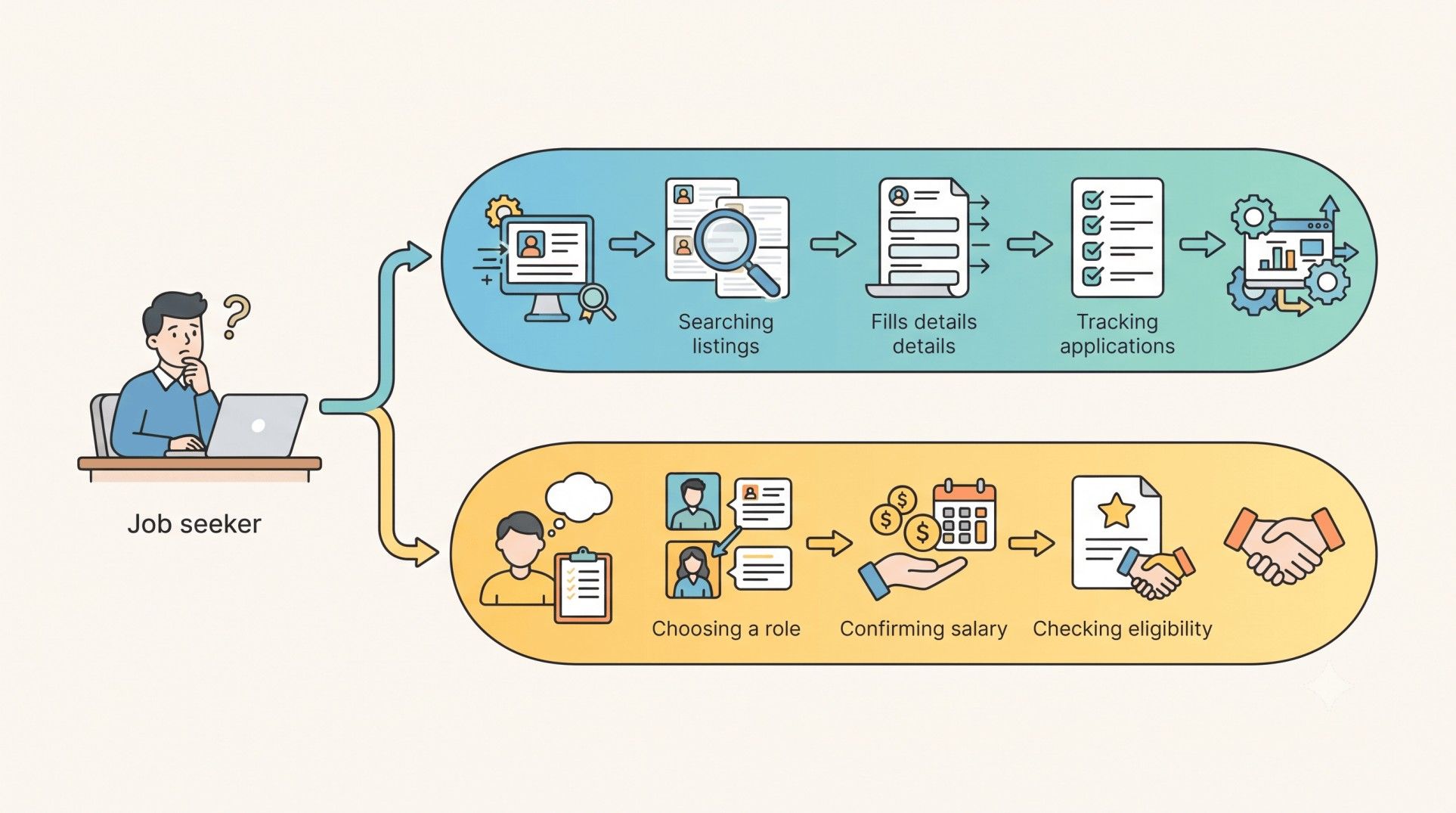
A simple framework can help determine where automation adds value and where manual review is more appropriate.
A useful rule is to automate a task when it is frequent, predictable, and easy to verify. Keep stronger human oversight when mistakes could affect eligibility, credibility, or an important career decision.
How LoopCV helps automate different stages of a job application
The best job application software should solve the parts of the search that consume the most time without forcing every task into the same workflow. LoopCV offers tools and features for several stages of the process.
- Find suitable vacancies: The AI Job Search Tool aggregates opportunities from multiple job boards and matches them against job titles, skills, locations, and other preferences.
- Automate application submissions: LoopCV's Auto-Apply platform can submit applications to matching roles, reducing repetitive form filling and submission work.
- Choose which jobs to apply for: Candidates who prefer more control can review matching opportunities and select jobs for manual or one-click application.
- Check resume quality: The AI CV Checker helps identify potential content, structure, and ATS compatibility issues before applications are sent.
- Compare resume keywords: The Resume Keywords Scanner compares resume text with a job description and highlights matching or missing terms.
- Build and tailor resumes: The AI CV Builder helps create and adapt resume content for relevant positions.
- Prepare cover letters: The Cover Letter Generator helps produce a starting draft that candidates can review and personalise.
- Contact recruiters: LoopCV's recruiter outreach feature can help find recruiter email addresses and send personalised emails.
- Track applications and results: The platform organises application activity and provides available response and performance information, helping candidates monitor progress and adjust their search.
These features can be combined according to the candidate's needs. Someone struggling to find enough relevant opportunities may benefit most from automated discovery and applications. Someone already finding suitable jobs may need help with resume quality, cover letters, or tracking instead.
The best setup is the one that removes repetitive work while keeping important decisions and final checks in the candidate's hands.
Conclusion
Deciding what to automate starts with understanding which job-search tasks are repetitive and which require personal judgment. Job discovery, routine data entry, and application tracking are often good candidates for automation, while career decisions, factual accuracy, and important application answers need human oversight.
AI job application tools are most useful when they address a specific bottleneck. Choose the tasks that consume the most time, establish clear rules, and review the results regularly. This creates a more efficient job search without sacrificing accuracy or control.
FAQs
What parts of a job application can AI automate?
AI can help with job discovery, resume tailoring, cover letter drafting, routine form filling, application submissions, and tracking. The available automation depends on the tool and the job platform.
Is job application software worth using?
It can be useful for candidates who apply to multiple roles and spend considerable time repeating the same tasks. The value depends on whether the software solves the main problem, whether its matches are relevant, and how much manual work it actually removes.
Should I let AI submit every job application automatically?
That depends on the roles and the level of control required. Automatic submission can work for well-defined searches, while high-priority roles or applications involving complex eligibility questions may deserve a manual review.
How can I choose the right AI job application tools?
Start by identifying the biggest bottleneck in the job search. Choose a tool that addresses that task, check whether it integrates with the required workflow, and review its output before relying on it at scale.
Can automation improve the quality of job applications?
Automation can improve consistency and reduce repetitive errors, while AI can help identify relevant keywords and organise application materials. Quality still depends on accurate information, appropriate job targeting, and human review.