
How Many Applications Does It Take to Get a Job? (Real Numbers + Strategy)
Job searching often feels like a numbers game. Many candidates ask the same question:
How many applications does it take to get a job?
The honest answer: most job seekers need between 20 and 80 applications before getting a job offer.
However, the exact number depends on your experience level, industry, resume quality, and how efficiently you apply.
In this guide, we’ll explain:
The average number of applications needed to get hired
Why some candidates get interviews faster than others
How to increase your interview rate
How automation tools like LoopCV can help you reach interviews faster
Average Number of Applications to Get a Job
Hiring data across multiple industries shows a common pattern in the hiring funnel.
| Stage | Average Conversion Rate |
|---|---|
| Application → Interview | 5–10% |
| Interview → Final Round | 20–30% |
| Final Round → Job Offer | 30–50% |
What this means in real numbers
If you apply to 50 jobs, the typical outcome looks like this:
3–5 interviews
1–2 final interviews
1 job offer
This is why many career experts recommend applying to 10–15 jobs per week until you receive an offer.
However, many job seekers struggle to maintain this pace because applying manually takes a lot of time.
Why Some People Get Jobs With Fewer Applications
Some candidates land a job after 10 applications, while others send 100+.
The difference usually comes down to these four factors.
1. Resume Quality
Your resume is the first filter recruiters see.
A strong resume should:
Include keywords from the job description
Highlight measurable achievements
Be optimized for Applicant Tracking Systems (ATS)
Even small improvements can significantly increase interview rates.
2. Targeted Applications
Applying randomly rarely works.
Instead, focus on:
Jobs where you meet 70–80% of the requirements
Positions aligned with your experience
Companies actively hiring
Targeted applications increase your chances of hearing back.
3. Application Speed
Many recruiters review the first 50–100 applicants and may not look at later ones.
That means applying early gives you a major advantage.
But monitoring multiple job boards and applying quickly can take hours every day.
This is where automation tools like LoopCV can help.
4. Industry Competition
Some industries simply require more applications.
Typical ranges look like this:
| Industry | Average Applications |
|---|---|
| Tech | 30–60 |
| Marketing | 40–80 |
| Finance | 50–100 |
| Entry-level roles | 80–150 |
Entry-level job seekers usually need to send more applications due to higher competition.
How to Increase Your Interview Rate
If you're sending applications but getting few responses, the issue is usually strategy rather than volume.
Here are some proven ways to improve results.
Optimize Your Resume for ATS
Most companies use automated systems to scan resumes.
To pass these systems:
Use relevant keywords from job descriptions
Avoid complex formatting
Use clear section headings
This increases the chances that your resume reaches a recruiter.
Apply to More Jobs Consistently
Consistency is critical.
A common mistake job seekers make is applying to only a few jobs per week.
The most successful candidates typically apply to 10–20 jobs per week.
But applying manually can take 2–3 hours per day, especially if you're searching across multiple job platforms.
How LoopCV Helps You Apply to More Jobs Faster
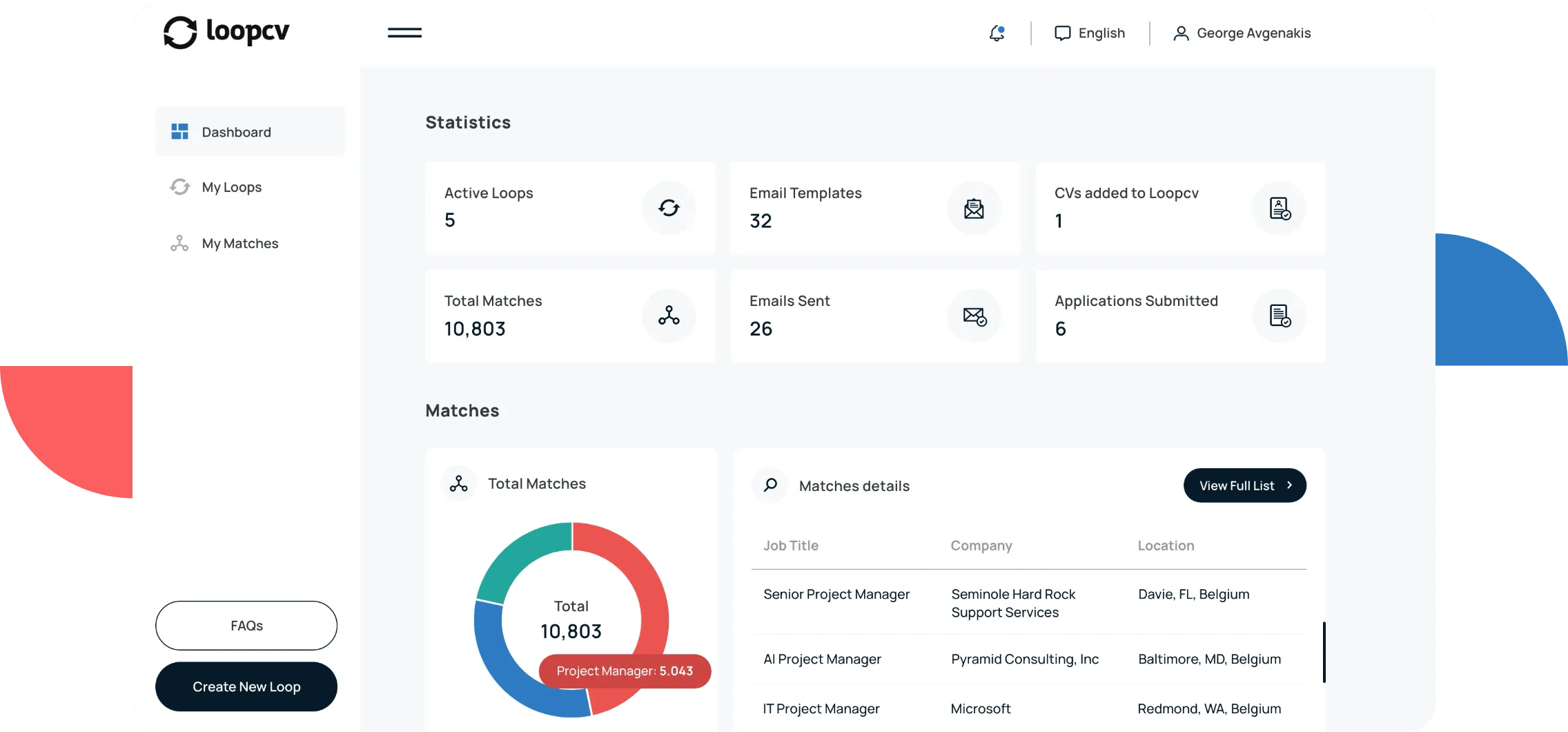
Applying to enough jobs is one of the biggest challenges in a job search.
Instead of spending hours manually filling out applications, LoopCV automates the process for you.
LoopCV helps job seekers:
Automatically apply to hundreds of relevant jobs
Discover new job postings across multiple platforms
Track applications in one dashboard
Increase their chances of landing interviews faster
Because LoopCV continuously searches and applies for new roles, you can dramatically increase the number of applications you send without spending extra time.
More applications mean more chances to get interviews.
For many job seekers, this helps them secure their first interview much faster than applying manually.
How Many Job Applications Should You Send Per Week?
A healthy job search typically looks like this:
Recommended weekly targets
10–20 job applications
3–5 networking conversations
1–3 interviews per month
At this pace, many candidates receive a job offer within 4–8 weeks.
With automation tools like LoopCV, it's possible to apply to significantly more roles, which can speed up the hiring process even further.
Signs Your Job Search Strategy Is Working
You’re applying effectively if you start seeing:
1 interview for every 10–15 applications
Recruiters reaching out to you
Invitations to second or final interviews
If you apply to 30+ jobs without interviews, you should improve your resume or adjust your targeting.
Key Takeaways
Most job seekers need 20–80 applications to get a job
A good interview rate is 1 interview per 10–15 applications
Entry-level roles may require 100+ applications
Applying consistently every week increases your chances of success
Automation tools like LoopCV can help you apply to more jobs and get your first interview faster
Final Thoughts
Getting a job is partly about quality, but it’s also about volume and consistency.
The more relevant jobs you apply to, the higher your chances of getting interviews.
Tools like LoopCV make this process easier by automating job discovery and applications — allowing you to focus on preparing for interviews instead of spending hours applying manually.
And when you can increase your applications faster, you also increase your chances of getting hired sooner.