
How to Know if You're Qualified Enough to Apply for a Job
You don't need to meet every requirement in a job description to be qualified enough to apply. In most cases, the better test is whether your experience covers the core responsibilities and the requirements that are genuinely essential to the role.
A few missing skills or preferred qualifications shouldn't automatically rule you out, especially when your existing experience is transferable. At the same time, some gaps, such as a required license, work authorization, or a core technical skill, can make an application unrealistic.
The key is knowing the difference. By comparing the job's main requirements with your own experience, skills, qualifications, and level of responsibility, you can decide whether a role is worth applying for instead of relying on a simple match percentage.
AI can help with that comparison by breaking down the job description and highlighting where your background aligns, where it partially aligns, and where genuine gaps exist.
- You don't need to meet every requirement to be qualified enough to apply.
- Core responsibilities are often more useful for assessing fit than the total number of matching skills.
- Required qualifications should be considered separately from preferred ones.
- Transferable experience can cover some gaps in a job description.
- Seniority and scope of previous work matter when assessing whether experience is relevant.
- A few missing preferred skills shouldn't automatically stop an application.
- AI can help compare a resume with a job description, but the final decision should remain with the candidate.
What does "qualified enough" actually mean?
Being qualified enough doesn't mean having the exact background an employer described in its ideal candidate profile.
Job descriptions can combine several types of information. Some lines describe what someone must have, while others explain what would make an application stronger. There may also be responsibilities, practical conditions, and skills that can be learned after joining.
A candidate may be qualified enough when they:
- Meet the main qualifications.
- Have experience performing similar work.
- Possess the skills needed for the core responsibilities.
- Can demonstrate relevant achievements.
- Have transferable experience where smaller gaps exist.
- Meet practical requirements such as location or work authorisation.
The useful question is not "Do I match everything?" but "Are the gaps serious enough to make me unable to do the job?"
How to assess whether you're qualified for a job
Compare your experience with the core responsibilities
Start with the work itself.
A job description might list ten different skills, but the responsibilities section can reveal what the employer actually needs someone to accomplish.
Read the main responsibilities and ask:
- Have I done this before?
- Have I done something substantially similar?
- Do I understand this type of work?
- Can I show a result or achievement related to it?
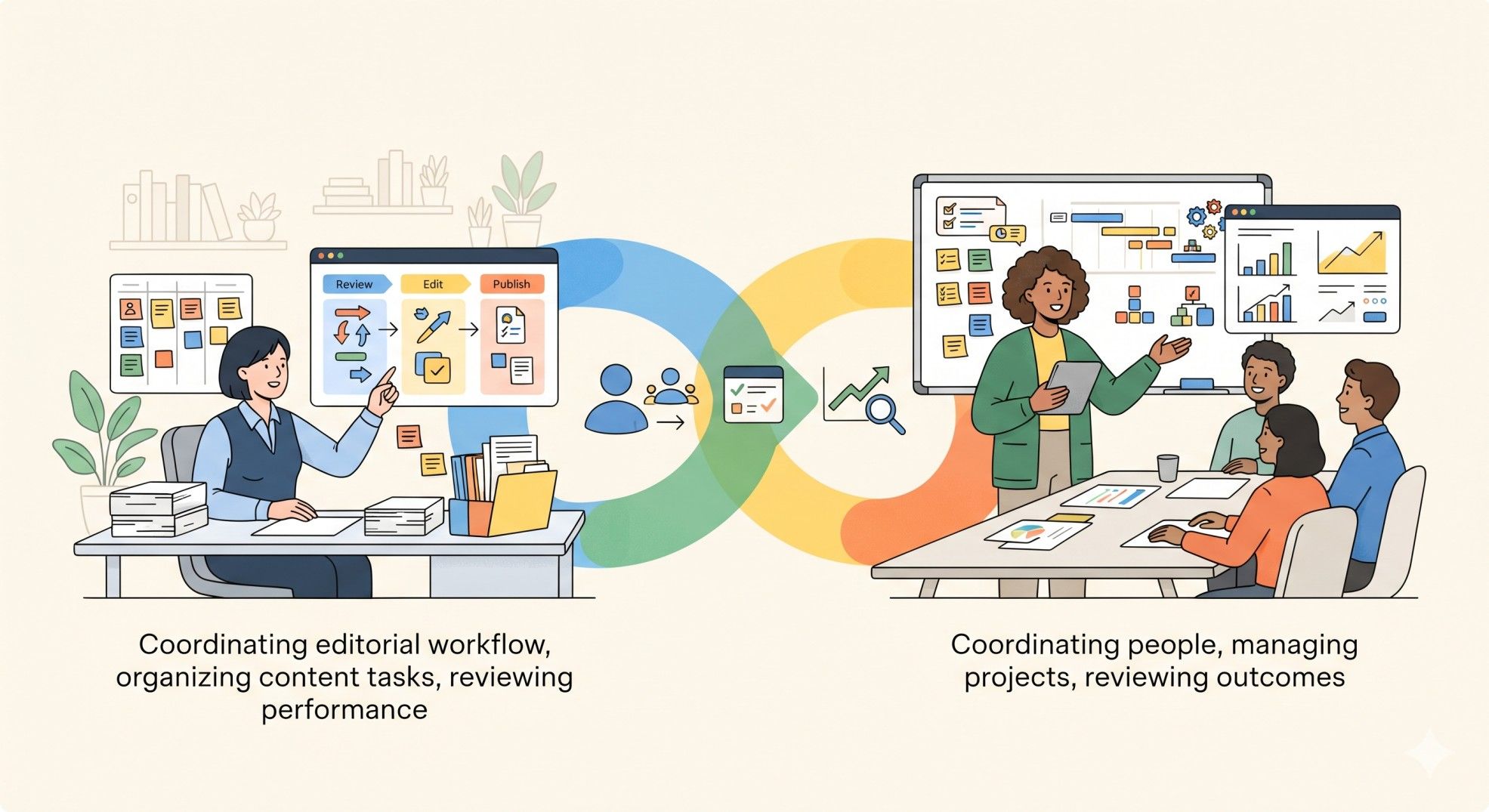
For example, a role may involve managing content calendars, coordinating writers, analyzing organic performance, and working with SEO teams.
A candidate doesn't necessarily need to have held the exact same title. Experience managing editorial workflows, coordinating content teams, and reporting on SEO performance may demonstrate relevant capability.
Check the essential qualifications
Next, review formal requirements.
These can include:
- Degree requirements.
- Professional licenses.
- Certifications.
- Minimum years of experience.
- Work authorisation.
- Language requirements.
Some qualifications may be flexible, while others aren't.
A candidate might be able to compensate for a preferred certification with substantial practical experience. A missing legal licence, however, could prevent the candidate from performing the role altogether.
This is why qualifications should be assessed individually rather than treated as one large checklist.
Look at the required skills
Separate the skills that are central to the job from those that are simply useful.
If a software engineering role requires experience with a programming language that forms the basis of the team's work, not having that skill is a significant gap.
If the posting lists another tool as preferred, the gap may be much less important.
The question isn't:
"How many skills do I have?"
It's:
"Do I have the skills needed to handle the most important parts of this role?"
Consider transferable experience
Relevant experience doesn't always come from the exact same role or industry.
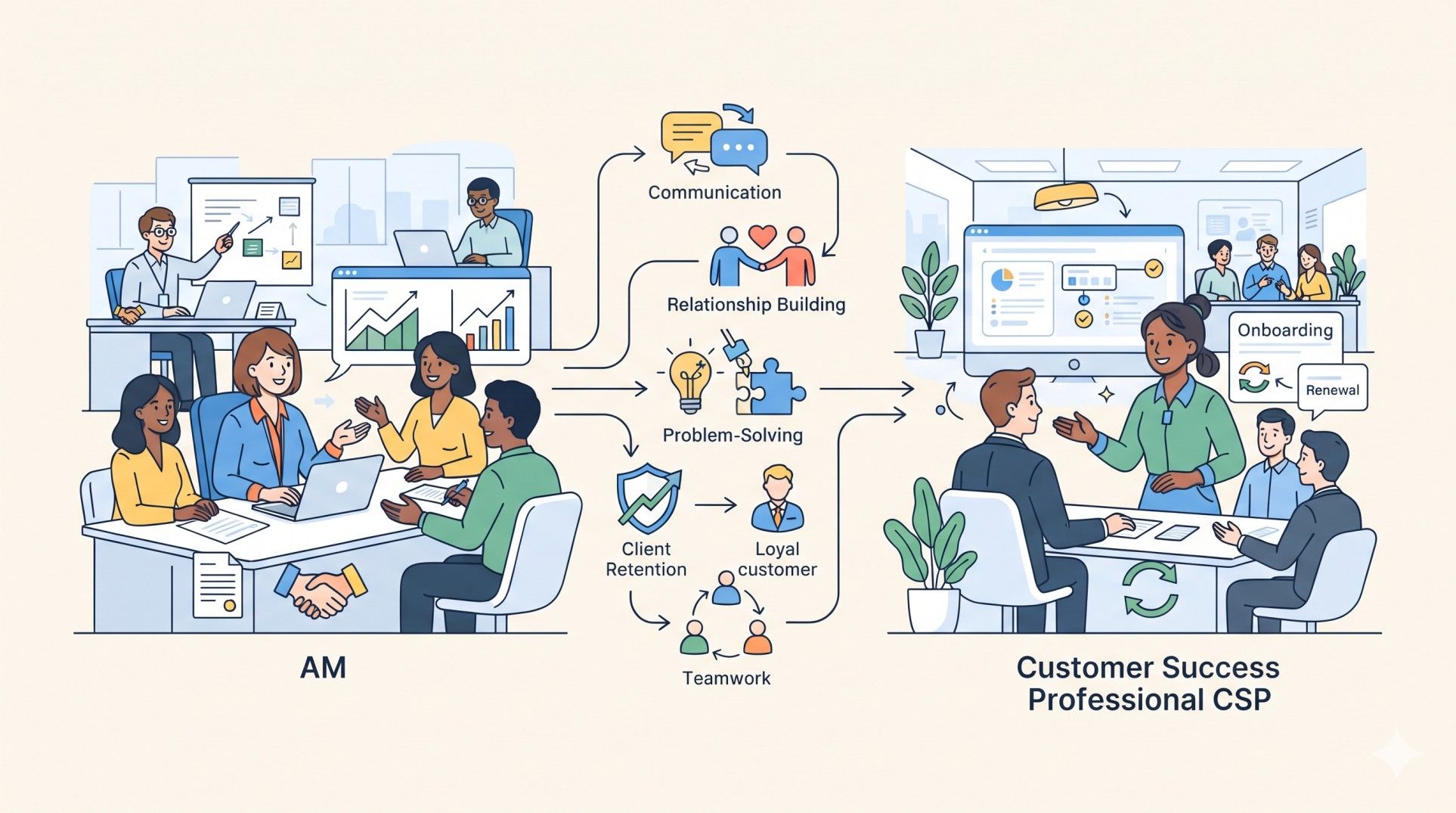
A candidate moving from account management to customer success may already have experience with:
- Client communication.
- Relationship management.
- Retention.
- Problem resolution.
- Cross-functional coordination.
The job titles are different, but several capabilities overlap.
Transferable skills are especially useful when the gap concerns a tool, process, or terminology rather than a fundamental capability.
Compare your level with the role
Job titles aren't always reliable indicators of seniority.
A "Manager" at one company may manage a team, while another company may use the title for an individual contributor with broader responsibilities.
Look at:
- Scope of responsibility.
- Team size.
- Decision-making authority.
- Years of experience.
- Ownership of projects or budgets.
- Stakeholder exposure.
Someone may have a different title but still have performed work at a comparable level.
Review the preferred qualifications separately
Preferred qualifications shouldn't be treated in the same way as mandatory requirements.
For example:
"Experience with HubSpot preferred."
Not having HubSpot experience doesn't necessarily make the candidate unqualified if they have substantial experience with comparable CRM platforms.
A job may also list an advanced certification as preferred even though a candidate has significant practical experience in the same area.
Preferred qualifications can strengthen an application, but they don't always determine whether someone is qualified enough to apply.
Pro Tip: LoopCV's AI CV Checker can help review how clearly a resume communicates relevant experience and skills for a target role. Use the feedback to identify areas where existing experience could be presented more effectively.
How much of a job description do you need to match?
There is no reliable percentage that determines whether someone is qualified enough to apply.
A candidate could match 80% of a job description and still miss one requirement that is genuinely essential.
Another candidate could match 65% of the listed skills but have strong experience in the role's core responsibilities and transferable experience that covers several gaps.
Instead of counting requirements, divide them into three groups:
This provides a more realistic view of job fit than a simple percentage.
When a qualification gap shouldn't stop you from applying
A gap may be less important when:
- The skill is listed as preferred.
- Similar experience can reasonably transfer.
- The tool can be learned relatively quickly.
- You exceed other important requirements.
- You have handled the same responsibility using a different process or platform.
- The employer specifically mentions equivalent experience.
For example, a candidate with extensive experience using Adobe Analytics may still be worth considering for a role that prefers experience with another analytics platform, provided the underlying analytical skills are relevant.
The same principle applies to job titles. You don't necessarily need to have held the exact title if previous responsibilities demonstrate comparable work.
Pro Tip: LoopCV's Resume Keywords Scanner can compare your resume with a job description and surface relevant terms and potential gaps. If an important term is missing but the underlying experience is already present, the comparison can highlight where the resume needs clearer wording.
When you probably shouldn't apply
There are also situations where the gap is substantial enough to make an application unlikely to be worthwhile.
Consider reconsidering the application when:
- A required licence is missing.
- Work authorization requirements aren't met.
- The role requires a qualification you don't have and the employer doesn't accept alternatives.
- Several core responsibilities are completely unfamiliar.
- The seniority is significantly beyond your experience.
- A critical technical skill is absent and forms the basis of the role.
- The work arrangement is incompatible with your circumstances.
The point isn't to discourage applications. It's to avoid spending hours tailoring an application for a role where a fundamental requirement cannot be met.
How AI can help assess your job fit
AI can make this assessment faster, particularly when a job description is lengthy.
A useful prompt might be:
"Compare my resume with this job description. Separate the requirements into essential, preferred, and transferable. Identify the requirements I clearly meet, those I partially meet, and those I don't meet. Don't assume that a missing keyword means I lack the underlying skill."
This last instruction matters.
A resume may say "managed organic growth" while the job description says "SEO strategy." A simple keyword comparison could flag SEO as missing even though the candidate may have relevant experience.
AI can also help identify transferable experience that may not be obvious from the wording of the resume.
The candidate should still verify the analysis before making an application decision.
Common mistakes when deciding whether you're qualified
Waiting until you meet every requirement
Job descriptions often describe an ideal candidate. Treating every preferred qualification as mandatory can eliminate realistic opportunities.
Looking only at job titles
Titles vary widely between companies. Responsibilities and scope provide a better comparison.
Counting keywords instead of assessing experience
Matching terms doesn't necessarily mean matching the work.
A candidate with fewer matching keywords may still have stronger relevant experience.
Ignoring transferable skills
Experience from a related role can cover more of the requirements than the resume initially suggests.
Applying without checking genuine deal-breakers
The opposite problem can also occur. A candidate shouldn't ignore requirements that are genuinely essential simply because most of the posting looks like a good fit.
Changing the resume to claim skills that aren't there
If a job requires a skill the candidate doesn't have, adding the keyword won't make the candidate qualified.
The resume should present existing experience more effectively, not manufacture new experience.
How to use AI without letting it decide for you
AI can compare, classify, summarise, and identify patterns. The candidate still has to decide whether the opportunity makes sense.
A practical process looks like this:
1. AI breaks down the job description.
Identify core responsibilities, qualifications, required skills, preferred skills, and practical conditions.
2. AI compares the requirements with the resume.
Separate clear matches, partial matches, transferable experience, and genuine gaps.
3. The candidate checks the gaps.
Determine whether each gap is essential, flexible, or relatively easy to address.
4. The candidate makes the decision.
Consider career goals, compensation, location, seniority, interest in the role, and other factors AI may not fully understand.
This approach makes AI a useful second set of eyes without turning the application decision into an automated yes-or-no result.
Pro Tip: LoopCV's AI Job Search Tool can help surface opportunities based on target roles and preferences. Starting with a more relevant job pool makes it easier to focus time on positions where the background has a realistic chance of fitting.
How LoopCV can help find and evaluate relevant jobs
Assessing whether a role is worth applying to is only one part of the job search. LoopCV provides several tools that can help at different stages, from finding opportunities to preparing the application.
- Find relevant jobs: The AI Job Search Tool helps candidates find opportunities based on their target roles and preferences.
- Review resume quality: The AI CV Checker helps identify areas where the resume could communicate relevant experience more effectively.
- Check keyword alignment: The Resume Keywords Scanner compares resume content with a job description to surface relevant terms and potential gaps.
- Build and tailor a resume: The AI CV Builder helps create or customize resume content for different roles.
- Create cover letters: The AI Cover Letter Generator helps prepare role-specific cover letters.
- Automate applications: LoopCV can automate repetitive parts of applying to suitable opportunities.
- Track applications: Application tracking features help organise submitted applications and keep the job search manageable.
The purpose isn't to apply to every job that looks remotely relevant. These tools can help candidates spend less time sorting through opportunities and more time on the roles that genuinely align with their experience and goals.
Conclusion
Being qualified enough for a job isn't about matching every line in a job description. It's about having enough relevant experience, skills, qualifications, and transferable capabilities to handle the core requirements of the role.
Start with the work itself. Then separate essential requirements from preferred ones, look at the level of responsibility involved, and consider whether any gaps can reasonably be covered by related experience.
AI can make this process faster by comparing the job description with the resume and highlighting areas worth examining. But the final decision should still come from the candidate.
If the core of the role matches the candidate's background and the remaining gaps are flexible, an imperfect match can still be worth an application.
FAQs
Do I need to meet every requirement before applying for a job?
No. Many job descriptions include preferred qualifications alongside essential requirements. If the core responsibilities and important requirements align with your experience, missing a few preferred qualifications shouldn't automatically stop you from applying.
How do I know if I am qualified enough for a job?
Compare your experience with the main responsibilities, check the required qualifications and skills, assess the role's seniority, and separate mandatory requirements from preferred ones.
What percentage of a job description should I match?
There is no reliable percentage. The importance of each requirement matters more than the total number of matches. Missing one essential qualification can matter more than missing several preferred skills.
Should I apply if I don't have one of the required skills?
It depends on how central the skill is to the role and whether you have comparable or transferable experience. If the skill is fundamental to the job and you have no related experience, the gap is more significant.
Can AI tell me if I'm qualified for a job?
AI can compare your resume with a job description and identify matches and gaps. It can support the assessment, but it cannot determine job fit with certainty or account for every factor involved in an application decision.