AI Job Search vs. Traditional Job Boards: Which Gets You Hired Faster?
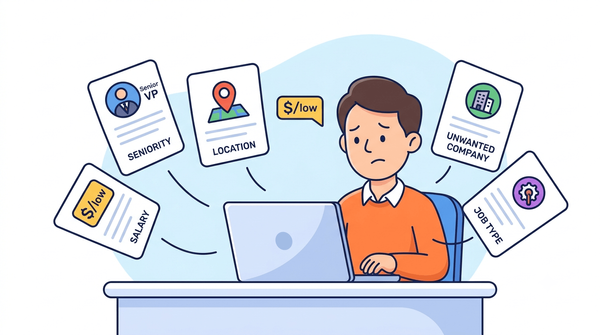
AI job search tools have changed how candidates find and manage job opportunities. Instead of handling every part of the process manually, candidates can use automation to search for relevant roles, tailor resumes, manage applications, and reach out to recruiters.
Traditional job boards still have an important place in the process. They give candidates direct access to job listings and allow them to review each opportunity themselves.
The real difference is how each approach handles job discovery, application volume, resume tailoring, and follow-up.
- Traditional job boards give candidates direct control over which jobs they review and apply to.
- AI job search tools can automate repetitive parts of the process, including job discovery, resume tailoring, applications, tracking, and outreach.
- A larger number of applications does not automatically lead to better results. Clear targeting and relevant matches still matter.
- Resume relevance remains important as application volumes increase. Tailoring should reflect the requirements of the role without adding keywords that do not match your experience.
- Networking, recruiter outreach, and referrals can complement applications found through job boards and AI job search tools.
- LoopCV combines job discovery, CV tailoring, applications, tracking, recruiter outreach, and interview preparation in one workflow.
How is AI job search different from a traditional job board?
The biggest difference is the amount of manual work involved.
A traditional job board mainly provides access to job listings. The candidate searches for roles, filters the results, reads job descriptions, checks requirements, prepares the application, and tracks what was submitted.
An AI job search tool can connect several of these steps. Instead of treating job discovery and applications as separate tasks, it can help manage them as one workflow.
LoopCV, for example, can search multiple job sources based on your criteria, identify relevant roles, tailor your CV, and automate applications.
This does not make traditional job boards unnecessary. It changes how candidates can use them.
Does applying to more jobs improve your chances?
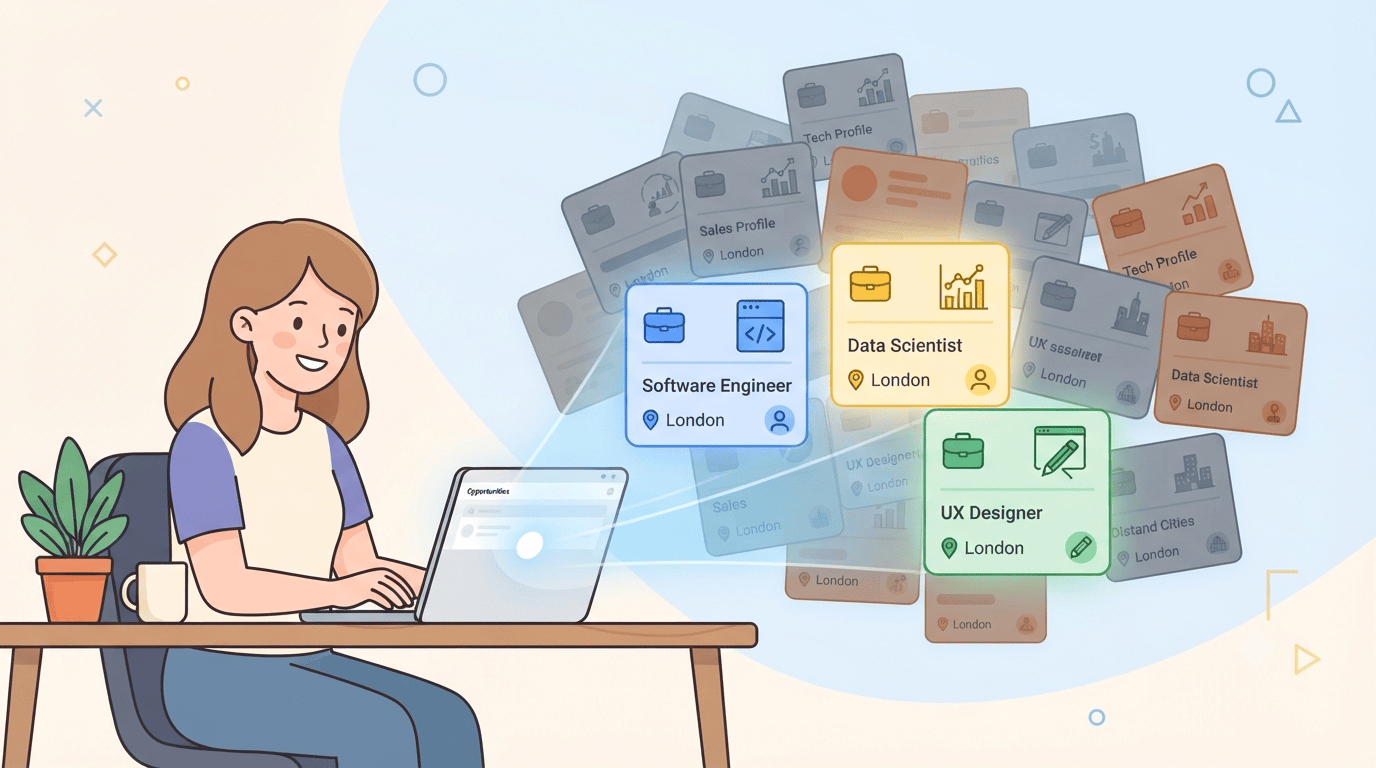
Application volume matters, but sending more applications is not the same as sending better applications.
This has become more important as the number of applications competing for individual roles has increased. Greenhouse's recruiting benchmarks found that the average number of applications per job increased from 116 in 2022 to 244 in 2025.
That creates a larger pool for recruiters to review.
For candidates, the response should not simply be to apply to everything. A better approach is to define clear criteria and focus on jobs that actually match your experience, skills, location, and carer goals.
AI can help filter opportunities based on those criteria. Traditional job boards allow candidates to perform that filtering themselves.
The important factor is the quality of the match.
Pro tip: Start with LoopCV's review-first mode if you want to review the jobs selected for you before applications are submitted.
Why does resume tailoring still matter?
A relevant resume gives recruiters a clearer reason to consider an application.
Tailoring means adjusting the resume to reflect the requirements of a specific role. This can include using relevant keywords, moving important achievements higher on the page, and giving more attention to skills that match the position.
This matters as employers increasingly use technology during recruitment. SHRM's research on AI in HR found that 51% of organizations were using AI to support recruiting, with resume screening among the common uses.
The answer is not to fill a resume with every keyword from a job description. The keywords should accurately represent the candidate's experience.
A tailored resume should still sound like the candidate who wrote it.
Pro tip: Use LoopCV's AI CV Checker to review your resume before applying. It can help identify areas that need improvement before you send the application.
Where do networking and referrals fit?
Job boards are only one way to find opportunities.
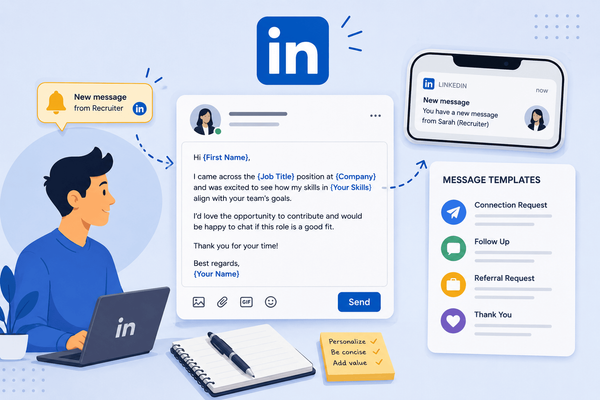
Candidates can also contact recruiters, connect with employees, ask for referrals, and approach companies directly. These activities can be particularly useful when a candidate has a specific company or role in mind.
AI job search does not need to replace these activities. It can handle parts of the application workflow while candidates spend time building professional relationships.
Recruiter outreach can also be more targeted when the candidate already knows which roles and companies they want to pursue.
Pro tip: Use LoopCV's automatic recruiter email feature to add recruiter outreach to your job search.
How LoopCV can automate your job search
LoopCV is one of the best tools for candidates who want to bring different parts of the job search into one workflow.
It can help with job discovery, resume tailoring, applications, tracking, recruiter outreach, and interview preparation.
Candidates can use LoopCV to:
- Find relevant jobs: Set criteria around job titles, locations, and other preferences.
- Tailor CVs: Adapt resume content to individual job descriptions.
- Automate applications: Apply to relevant opportunities without completing every application manually.
- Review applications: Use review-first settings when more control is needed.
- Track applications: Keep applications and their statuses organized.
- Reach recruiters: Add recruiter outreach to the application process.
- Test resume versions: Compare different versions of a CV.
- Prepare for interviews: Use AI-powered interview preparation after applications start generating interviews.
LoopCV also offers a free plan for candidates who want to start with a smaller level of automation.
Pro tip: Use LoopCV's CV A/B testing to compare different resume versions and see which approach gets better responses.
When is a traditional job board a better fit?
Traditional job boards can be useful when you want to manually evaluate a small number of opportunities.
For example, a candidate targeting a specific company may want to research every opening, read the full job description, check the team, and decide whether the role is worth pursuing.
Manual searching can also make sense for highly specialized roles with relatively few openings.
The same applies when a candidate wants to control every application individually.
AI automation becomes more useful when the search includes many relevant opportunities or when managing applications across multiple sources becomes difficult.
How should you combine AI job search and traditional job boards?

The two approaches can work together.
A practical workflow is:
- Define your target roles. Decide which job titles, locations, companies, and other criteria matter.
- Build your resume. Make sure it accurately reflects your experience and relevant skills.
- Set your search criteria. Keep the search focused on roles that genuinely match your background.
- Review the opportunities. Check whether the jobs being identified are relevant before increasing automation.
- Tailor important applications. Give additional attention to roles that are especially relevant.
- Network alongside applications. Contact recruiters, employees, and professional connections.
- Track your results. Monitor applications, responses, interviews, and resume versions.
- Adjust your approach. Use your results to decide which roles and application methods deserve more attention.
This gives candidates the reach of job boards and automation while keeping important decisions under their control.
Conclusion
AI job search and traditional job boards serve different purposes.
Traditional job boards give candidates direct access to opportunities and full control over individual applications. AI job search tools can connect job discovery, resume tailoring, applications, tracking, and outreach into a more structured workflow.
Neither approach removes the need for a relevant resume or a focused job search.
The most practical approach is to use the method that fits the search. Candidates targeting a small number of specific roles may prefer more manual control. Candidates managing a larger search may benefit from automating repetitive tasks.
FAQs
Is AI job search better than traditional job boards?
They work differently. Traditional job boards focus on job listings, while AI job search tools can automate additional parts of the search and application process.
Can AI job search replace job boards?
AI job search tools can work with jobs sourced from job boards and other sources. They do not necessarily replace the underlying job boards.
Should I apply to as many jobs as possible?
No. Focus on roles that match your experience, skills, location, and career goals. Application volume is useful only when the applications are relevant.
Does AI job search replace networking?
No. Recruiter outreach, referrals, and professional relationships remain important parts of a job search.
Is LoopCV free?
LoopCV offers a free plan with limited usage. Candidates can start with the free plan and upgrade if they need more automation.